




The full story
By the Storedwatts editors · Published Nov 20, 2026
The TRAIL 300 DC is easy to like and easy to misjudge. The battery, the weight and the price all earn praise, while the missing AC outlet, the charging record and the lack of water resistance decide whether it fits your trip.
Phones for a week, a Starlink Mini for a working day10.0/10
The 288 Wh battery is the strongest part of this station, praised almost without exception. Watt-hours (Wh) are how much energy it stores, and this is enough for a long weekend of small electronics. The Solar Lab found it would charge a large iPhone "about 15 times".1
Longer use backs that up. Bob Vila's tester worked remotely from it, recharged only on weekends, and was surprised it was "always able to power through entire weeks".2 For a steadier load, Everyday Tech Gear puts it plainly: "This will run the Starlink Mini for about 10 hours".3
The caveat is that this is a small battery. Add a laptop and phones to that satellite dish and the hours drop quickly. It is sized for charging devices, not for running an appliance through an outage.
Strong USB-C ports, and nothing for a wall plug6.0/10
Output divides opinion, and the split comes down to what you plan to plug in. Watts (W) are how much it can supply at once, and the 300 W here goes out through USB-C, USB-A and a 12 V car-style socket. The USB-C ports are fast enough to charge and run a full-size laptop, which is why photographers and remote workers like it.
There is no inverter, so there is no AC outlet. rv.com spells out what that rules out: "small appliances like a coffee maker, blender, or CPAP machine".4 Everyday Tech Gear adds a qualifier, noting that a CPAP with its own DC power cord can run from the 12 V socket.5 Check with the device maker before relying on that.
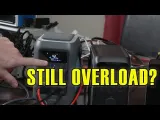
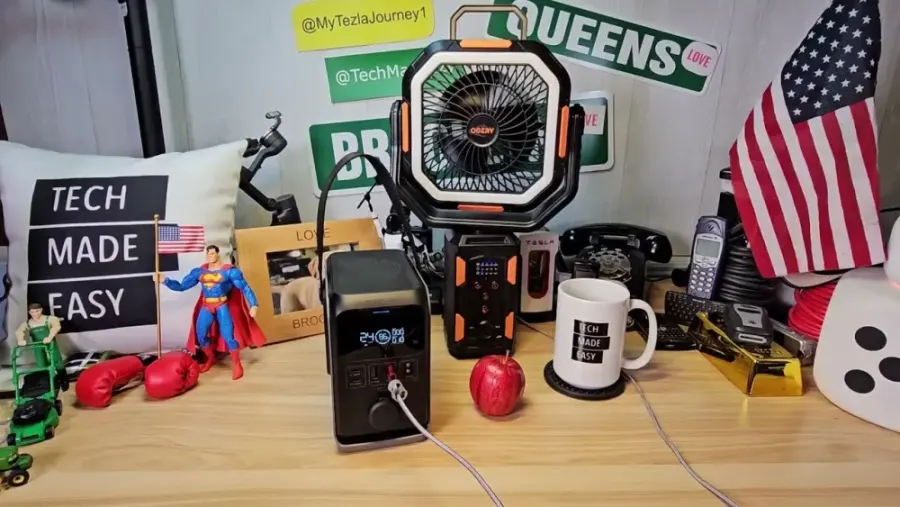
There is also no surge headroom. Surge is the brief start-up kick that a pump or compressor needs, and Tech Made Easy is blunt about it: "There is no surge."6 FamilyGeekery saw the overload protection trip during testing, so treat the output limit as a hard one.
Quick through both USB-C ports, when both ports cooperate7.5/10
Charging is widely liked, with one serious exception. EcoFlow gives Approx. 2.5 hrs at 140 W from a single USB-C charger, and both USB-C ports accept power, so a second charger shortens that. Gadgets & Gravel went from empty to full in "right about 85 minutes" that way.7
Vicious Computers could not repeat it. Their unit drew no more from two chargers than from one, although USB-C and solar together did work, and a replacement unit showed the same fault.8 Solar Power & Portable Technology with TechMan also cautions that the advertised dual-port speed is not always reached.
“So it looks like dual charging between one USB port and solar is working, but dual charging between two USB ports is not working.”
Solar input tops out at 110 W, and several sources saw a portable panel reach that limit in good sun. Day-to-day results are slower: Bob Vila's tester needed "an average of 8 hours" to bring it from low to full with one panel.9 The solar port also has a voltage ceiling, and Everyday Tech Gear warns that if a panel exceeds it, "you'll literally smoke the unit".10
2.58 kg on a handle that tucks away9.1/10
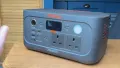
Portability is praised almost without exception. At 2.58 kg it sits closer to a large power bank than to a typical power station, and the fold-away handle makes it easy to hang or carry in one hand. Gadgets & Gravel calls it tiny and very light.11
Dustin Abbott found it lighter and a little smaller all round than a comparable rival. Bob Vila's tester chose it over an Anker for remote work for the same reason.
The shape is the one reservation. It is a box, and JEDIJA notes you will have to make room for it in a backpack. It fits a day pack, but it takes up a good share of one.
Survived the drop tests, unprotected against a splash5.0/10
The case handles knocks but has no protection against water. The Solar Lab dropped it repeatedly and reports "it lived on every single one", though the screen came away scratched.12 The cells are LiFePO4, a chemistry several sources credit with a long service life, though the cycle figures they quote differ from one another.
Water is the weak point. There is no water resistance, and Gadgets & Gravel would like to see some on a product named for the trail and meant for camping.13 Dustin Abbott calls it a missed opportunity that weather protection needs an optional case.
The build score sits in the middle partly because of the charging fault Vicious Computers found on two units in a row. That is one tester's experience, but it is on the record. On a quieter note, Tech Made Easy could not hear a fan at all while charging a laptop.
A screen readable in sunlight, with no app and no lamp4.2/10
The feature list is short, and how much that matters depends on the buyer. The display is the highlight: bright, readable in sunlight, and clear about input, output and time remaining. Standby drain is low as well, by The Solar Lab's day-long check.
There is no app. That means no remote control and no firmware updates, a gap several sources found surprising from EcoFlow. The Solar Lab also notes the unit switches itself off after a set period, with no way to change that setting.
It has no built-in light either, which some rivals include. For camping, pack a lamp.
A low price, and a box with no charger or cable10.0/10
Value is praised almost without exception. EcoFlow lists it at $250, and several sources found it discounted below that. Dustin Abbott's argument is that the same storage in small power banks would cost more.
“Put simply, that’s an incredible deal for a device of this size and capacity.”
The saving has a cost. The box holds the station and nothing else: no wall charger and no USB-C cable. Abbott says the missing cable "feels particularly kind of cheap".14
Budget for a high-wattage USB-C charger, or two if you want the faster refill. A phone charger will work, but far more slowly.
Our verdict
Buy the TRAIL 300 DC if everything you need to power charges over USB-C or a 12 V socket and you want 288 Wh in a 2.58 kg package at a fair price. Skip it if your outage plan includes a fridge or any household plug, or if the station will sit out in wet weather. Add a high-wattage USB-C charger and cable to the order, since none comes in the box. Test dual-port charging in the first few days, while a return is still easy.
8 sources quoted in this story (14 notes)
- 1The Solar Lab · 1:34 “It has a 288Wh battery, which in our testing, this unit would be able to charge an iPhone 16 Pro Max about 15 times, which is actually pretty good.”
- 2bobvila.com · written review “With that amount of usage, I was surprised that the Trail 300 was always able to power through entire weeks.”
- 3Everyday Tech Gear · 1:28 “Now, this is 288 watt hours. This handle is 20 watts average. This will run the Starlink Mini for about 10 hours.”
- 4rv.com · written review “The Trail 300 offers 300W of power output, making it a great option for keeping small mobile devices, like smartphones, tablets, and laptops, running while on the go.” but “But because the Trail Series lacks AC outlets, you won’t be able to operate small appliances like a coffee maker, blender, or CPAP machine.”
- 5Everyday Tech Gear · 1:45 “let's say you have a CPAP, you have a DC power cord, you can run that right out of the cigarette lighter.”
- 6Tech Made Easy · 9:11 “And I love that they put two 140 watt USB type-C's on this. That's the latest and greatest.” but “Power on this thing is 300 watts. That's it. There is no surge. So, keep in mind if your device has a surge, it will not work.”
- 7Gadgets & Gravel · 1:39 “So, you can put some serious power into this and get it from zero to charge up to full in about right about 85 minutes.” but “So, it isn't overly fast, uh, but it does get you charged back up in under two hours”
- 8Vicious Computers · 5:52 “So, we still have a problem with the replacement unit.”
- 9bobvila.com · written review “Charging the power station took an average of 8 hours to replenish it from below 20 percent to a 100-percent charge using my 100-watt solar panel.”
- 10Everyday Tech Gear · 2:41 “You don't want to exceed that or you'll literally smoke the unit and it won't ever be able to be used as a solar charger again.”
- 11Gadgets & Gravel · 1:02 “Right now, this thing is tiny. It is super light. Nice little handle on here to hang it from and carry it with.”
- 12The Solar Lab · 5:06 “over the course of the three different drop tests that we did with it, it lived on every single one.” but “It did actually scratch the screen up pretty good on this one.”
- 13Gadgets & Gravel · 2:38 “So this does have a lithium iron phosphate battery. So, it's going to be a lot better in terms of rechargeability and overall longevity of the battery itself.” but “Uh, it isn't water resistant, which I would like to see some water resistance on something that is called the trail and meant for camping.”
- 14Dustin Abbott · 14:12 “there's not even one USBC cable included in the box. And that feels particularly kind of cheap to me”