The full story
By the Storedwatts editors · Published Nov 19, 2026
The Nomad 50 is a simple product with one job: turn sunshine into a slow, steady charge for a power station or a phone. Most of what matters comes down to how much power it really makes, how easily it plugs in, and how well it travels.
Real output falls short of the 50W rating6.0/10
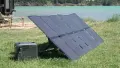
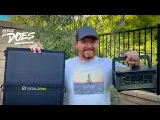
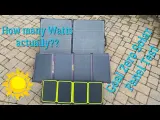
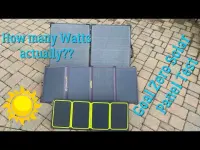
The Nomad 50 makes useful power in direct sun, but not the full figure on the label. Carolina Campervan watched it settle well below the rating: "the 50 kind of kept going between 30 and 35".1 Steve DOES did better on a provided unit in strong sun, reporting "about 40 to 45 watts out of my panel".2
“interestingly enough this thing came up to pretty full power rather quickly so we're at two bars and an arrow and 33 Watts” but “I think 34 is our Max here we're not going to see much more than that uh out of the Nomad 50”
The sky matters more than the number. The Outdoorsman, who used one while ice fishing, is blunt: "it has to be sunny out it can't be bright outside it has to be sunny".3 Partial shade does similar damage. Gadget Hive Pro found that when one section falls into the shadow of a tent stake or a branch, "the output takes an immediate hit".4
So the panel suits open campsites and clear days. Under trees or steady overcast, do not count on it.
Filling a power station takes patience
One Nomad 50 tops a station up; it does not refill a mid-size one in a day. Terradrift paired its panels with a Yeti 500X and treats the fastest charge time as a best case only. Its realistic estimate from empty to full is "around 24 hours or more of sunlight".5
That is several days of good weather in practice. It works for phones, lights and stretching a station through a long weekend. For anything that drains a battery fast, plan on chaining more panels or charging from the wall before leaving.
Plugging in is the best part8.3/10
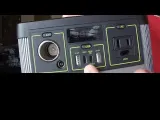
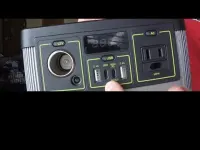
Connections are consistently praised. The 8mm cable is attached to the panel and goes straight into a Goal Zero Yeti or Sherpa, so there is no lead to lose.6 A USB port on the back charges a phone directly at the campsite, with no station needed.7
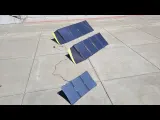
A chain port links it to other Goal Zero panels. Carolina Campervan runs it alongside larger ones and likes that the whole range connects together.8
There are limits. The attached cable is short, so the station has to sit close to the panel unless an extension is bought. A laptop is out of reach for the USB port; Campingsolar.us answers that one plainly: "Not directly via USB."9 The panel is built for Goal Zero gear, and other stations with 8mm inputs need the right adapter.
Flat and packable, with a few gripes6.7/10
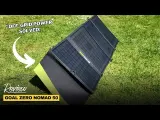
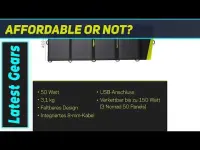
The fold is the most liked thing about carrying it. It opens wide for the sun and closes small enough for a backpack or a tight spot in a camper.10 At 6.85 lbs it is light for car camping and van use.
Opinion splits on the details. Steve DOES missed a carry handle on his unit: "there's no handle on it".11 Gadget Hive Pro, by contrast, describes a handle and magnetic snaps that keep it shut, so check the unit in hand. On foot or pulling a sled, The Outdoorsman still noticed the added weight.
Quick to set up, harder to aim8.3/10
Setup is simple and widely liked: unfold it, point it at the sun, plug in. The cords live in a pocket on the back, and legs behind the panel prop it up.
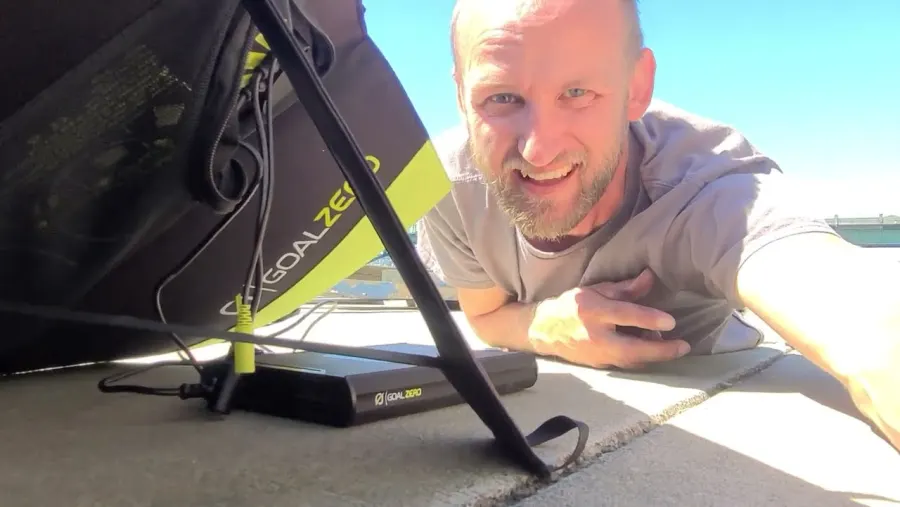
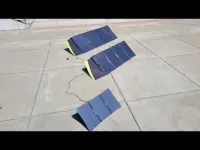
Those legs are the weak point. Gadget Hive Pro often gave up on free-standing use and ended up "propping it against a cooler or draping it over a rock".12 The fix is built in: loops at each connection point let it hang from a tent, a vehicle or a shed door.13
Built for camp life, priced high
Durability gets little coverage, and what there is reads well. The fabric shell is described as rugged and able to handle a light shower, though Campingsolar.us draws the line: "don’t take it for a swim or leave it out in a monsoon".14 The same source advises letting it dry before folding it away, to keep mildew off the fabric.
Price gets even less attention, and none of it is kind. At $249.95 for the panel alone, The Outdoorsman calls it "another expensive option", a complaint sharpened by its dependence on full sun.15
Our verdict
Buy the Nomad 50 if you own a Goal Zero station and want a compact, plug-and-go panel for sunny trips. Skip it if your campsites are shaded, your skies are often grey, or you need a fast refill, because real output sits under the 50W rating and falls away quickly without direct sun. Before buying, check that the attached cable will reach your station from a sunny spot, and think about where you will hang or lean the panel.
6 sources quoted in this story (15 notes)
- 1Carolina Campervan · 4:11 “the 50 kind of kept going between 30 and 35”
- 2Steve DOES · 6:19 “when i was doing the test and it was really sunny out i was getting about 40 to 45 watts out of my panel”
- 3The Outdoorsman · 5:14 “it has to be sunny out it can't be bright outside it has to be sunny goal zero solar panels are not the best”
- 4Gadget Hive Pro · 2:09 “If one section drops into the shadow of a tent stake or a stray branch, the output takes an immediate hit.”
- 5terradrift.com · written review “Realistically, you’re looking at around 24 hours or more of sunlight to go from fully depleted to fully charged.”
- 6campingsolar.us · written review “No more “Where did I put the 8mm cable?” stress. It’s built-in and ready to plug directly into your Goal Zero Yeti or Sherpa.”
- 7terradrift.com · written review “they even have a USB port that’s perfect for directly charging our phones when we’re just hanging out at the campsite, no power station required”
- 8Carolina Campervan · 5:16 “one cool thing about the gold zero products though is they're actually all chainable so theoretically i could chain all three of these panels”
- 9campingsolar.us · written review “Not directly via USB. You’ll want to charge a Sherpa 100AC or a Yeti station first, then plug your laptop into those.”
- 10campingsolar.us · written review “It opens up big to catch the sun but folds down small enough to slide into a backpack or a tight spot in your camper.”
- 11Steve DOES · 5:21 “one thing i found that this was missing was a handle there's no handle on it”
- 12Gadget Hive Pro · 2:21 “meaning you often end up propping it against a cooler or draping it over a rock instead of just setting it free standing on flat ground”
- 13Steve DOES · 5:37 “it's got these loops all around it so that way you can hook it up there's one at each connection point”
- 14campingsolar.us · written review “It’s highly water-resistant. It can handle a surprise drizzle,” but “but don’t take it for a swim or leave it out in a monsoon.”
- 15The Outdoorsman · 5:06 “also another expensive option because it's oh man i think like 200 bucks”