

The full story
By the Storedwatts editors · Published Nov 20, 2026
The Explorer 300 is a 2020 design that Jackery still sells new, and the reading on it is steady: easy to carry, easy to use, limited in what it can run. The disagreements are about how fast it refills and whether the price still holds up against newer small stations.
7.1 lbs on a fixed handle that will not fold9.1/10
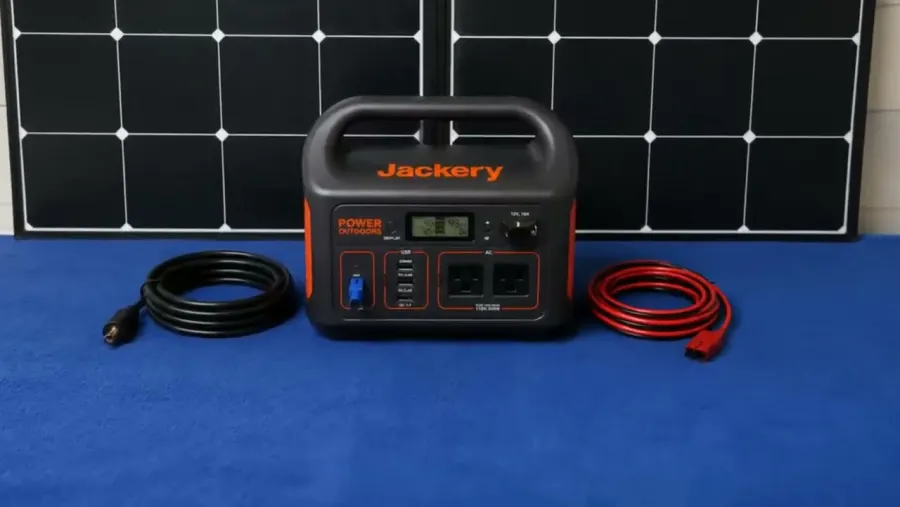
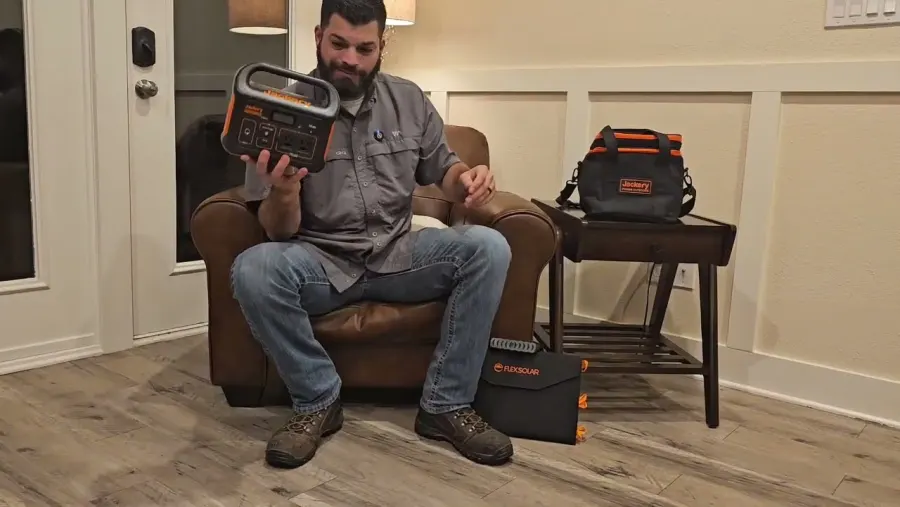
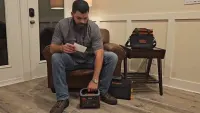
Portability is the reason to buy this station, and it is praised almost without exception. At 7.1 lbs it goes from a closet to the kitchen, or from the car to a tent, in one hand. It fits in a vehicle footwell, and some carry it in a backpack.
“It's more like carrying an oversized lunch box than hauling around a generator.”
The catch is the handle. It is comfortable, but SmartNest Tech points out that it does not fold down, which makes the unit harder to stack with other gear 1. Primal Outdoors found the same awkwardness when stowing it in a van. The wall charger is also a separate brick to pack.
Small devices for a weekend, a small cooler for hours8.7/10
The 293Wh battery is enough for small electronics over a weekend, and not enough for big loads. Watt-hours are how much energy a station stores. Here that means many phone charges, a few laptop charges, a fan through a warm night with charge left in the morning, or a small cooler for several hours.
How much of the label reaches the outlet depends on who measured it. HoboTech ran it down on a fixed load and reported "we got a very impressive 277 watt hours out of 293" 2. Outdoor Gear Lab's figure was lower: "The Explorer 300 delivered 247 Watt hours (Wh)" 3.
For a CPAP, SmartNest Tech relied on it for nights away from power, and Brison reports multiple nights with the humidifier removed and a DC adapter. Runtime depends on the machine and its settings, so check with the device maker. One quirk: very low-draw devices can trigger the automatic power-off, which Andrew flags for uses like radio monitoring.
A 300W limit that stops coffee makers and kettles6.3/10
The inverter is rated at 300W continuous with a 500W surge, and that decides what this station is for. Watts are how much it can run at once, and surge is the brief start-up kick a motor or compressor needs. Laptops, routers, camera chargers, lights and a TV sit comfortably under the line. Anything with a heating element or a big motor does not.

“And it won't run your fridge in a blackout. This is a device and laptop battery, not a home backup solution.”
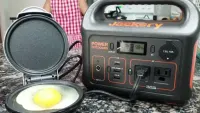
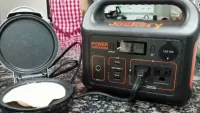
The failures are specific. J-Dubb's Adventure watched a coffee pot cut it off 4, and an Instant Pot and an angle grinder went the same way. Fridges are a gamble: a couple of owners ran one for a while, but most say a kitchen fridge is beyond it, and a small fridge's compressor tripped it for J-Dubb.
Within its limit the inverter is well regarded. It is pure sine wave, so sensitive electronics are fine, and it has a little headroom. Joeteck went past the rating: "I pushed it to 350 and it worked amazing" 5. The limit covers everything plugged in at once, AC and USB together, and a few sources wanted another USB port or two.
4.5 hours at the wall, with a USB-C shortcut in dispute7.2/10
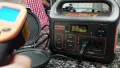
Charging is easy and flexible, but not fast. Jackery's figure is 4.5 hours from the wall, and Purple Collar Life found that accurate. Opinion splits on whether that is acceptable. Outdoor Gear Lab was blunt: "For such a relatively small battery, it took four hours to charge from a wall outlet." 6
The quicker route is the wall charger plus USB-C together. Outdoor Zone says that with both, "it hit 80% in just around 2 hours" 7. Not everyone could repeat it. HoboTech's unit behaved differently: "the power delivery port is output only" 8, and J-Dubb's Adventure never got USB charging to work. Check that the unit you buy accepts USB-C input before counting on it.
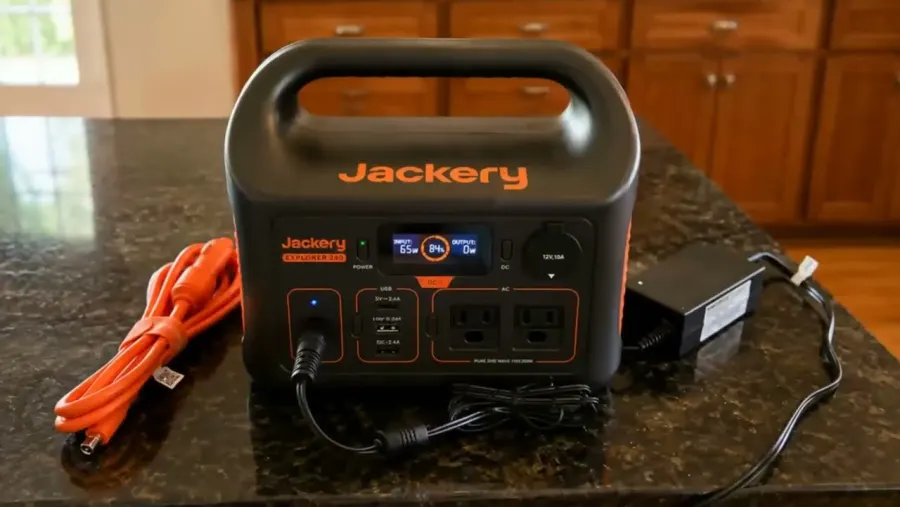
Jackery lists 90W max for solar, and measured peaks landed on both sides of that figure. With Jackery's own folding panel it fills in an afternoon of good sun. Third-party panels need an adapter for the Jackery input, and no panel is included. It also charges from a car socket and can power devices while it charges.
Solid plastic and a quiet fan, on older cells8.9/10
The casework is widely liked. The Review Hub notes that the shell does not creak when lifted and the handle feels secure 9. Others mention rubber feet, a covered car socket and no rattles. The Murray Homestead's unit has been out in the dirt and still gets used, and the fan is hard to notice.
The cells are the long-term caveat. This is a Li-ion NMC battery, and HoboTech notes it is "rated for 500 cycles to 80 capacity" 10. Newer lithium iron phosphate stations are rated for far more, and Kingy AI calls Jackery's own Plus model the smarter long-term buy for that reason. Some listings describe this station with the newer chemistry, so read the listing carefully.
Support gets two different reports. HoboTech praises Jackery's customer service. Purple Collar Life emailed questions and got no reply after about a month, and calls that a major flaw 11.
A plain screen, and no app, light or UPS6.5/10
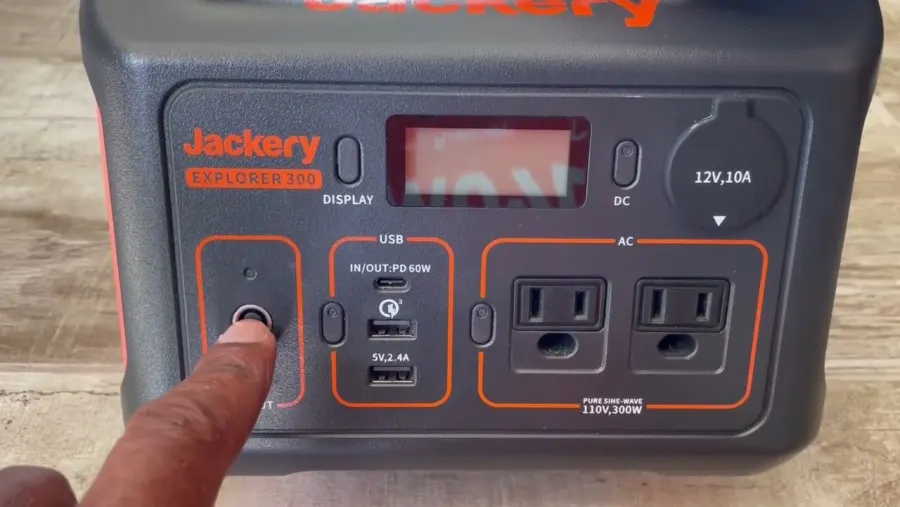
The feature list is short, which suits some buyers and not others. The display shows battery percentage, watts in and watts out. Kingy AI's take: "I love a simple screen" 12. There is nothing to set up, which matters in the dark during an outage.
What is missing is a longer list. There is no app, Wi-Fi or Bluetooth 13. Outdoor Gear Lab notes there is no expansion and no uninterrupted power supply mode, and that the screen gives no remaining-time estimate 14. The backlight times out quickly, and readings lag a second or two after plugging in.
The most repeated wish is a built-in light. Larger Jackery models have one and this one does not, which several sources missed in exactly the situations a small backup battery is bought for.
Fairly priced, and undercut on the spec sheet7.9/10
Value is widely liked, with a clear dissent. At $289 it is an affordable way into a well-built station from an established brand, and it is often discounted. An Expedition Portal member who was given the unit calls the price very hard to beat 15, and Outdoor Gear Lab notes it costs less than a close Anker rival while offering more output.
The counterpoint is the competition. HoboTech says "you can easily find other power stations in the 300 watt hour range cheaper than 300 bucks" 16. Outdoor Zone and EcoSnap concede the same and argue the value lies in build and ease of use. Primal Outdoors goes further and doubts the capacity is enough usable time to be worth it for fridge-style camping.
Our verdict
Buy the Explorer 300 if the job is small electronics: phones, a laptop, a router, a fan or a CPAP for a weekend away or a short outage, in a box light enough to forget about. Skip it if a kitchen fridge, a coffee maker or anything with a heating element is on the list, or if cell life and an app matter to you. Before paying $289, compare the street price with newer LFP stations of the same size, and confirm from the listing which Explorer 300 version you are getting.
10 sources quoted in this story (16 notes)
- 1SmartNest Tech · 0:28 “I found that size easy to manage on camping trips, vehicle trips, and boat outings.” but “The handle is comfortable for carrying, but it does not fold down. I noticed that this makes the unit harder to stack with other gear.”
- 2HOBOTECH · 5:25 “we got a very impressive 277 watt hours out of 293 or a whopping 95 out of this”
- 3outdoorgearlab.com · written review “It has enough capacity to charge our laptop a few times and recharge our phones for a whole weekend of use.” but “The Explorer 300 delivered 247 Watt hours (Wh), which makes it one of the smaller batteries in our tests and one of the lower performers in this metric.”
- 4J-Dubb's Adventure · 7:18 “so we're at 166 here the coffee pot screen has cut off oh too much that's a shame”
- 5Joeteck · 10:28 “However, 300 watts continuous is what I was expecting, but I pushed it to 350 and it worked amazing.”
- 6outdoorgearlab.com · written review “One positive aspect of this unit is its ability to charge with a USB-C cord, which is great if you can't find the AC wall outlet cord.” but “For such a relatively small battery, it took four hours to charge from a wall outlet.”
- 7Outdoor Zone · 2:44 “When we used the wall charger and USBC port at the same time, it hit 80% in just around 2 hours.” but “it doesn't play all that well with third-party solar panels, unless you're okay fiddling with adapters or going the DIY route.”
- 8HOBOTECH · 15:34 “the power delivery port is output only you cannot send power into it to charge the jackery”
- 9The Review Hub · 1:08 “the body feels solid. The shell doesn't creak when I pick it up, and the handle feels secure.”
- 10HOBOTECH · 2:00 “lithium ion nmc technology lithium battery rated for 500 cycles to 80 capacity”
- 11Purple Collar Life · 16:08 “to me that's a major flaw in the jackery is that if you do have an issue or you do have a question and you reach out to jackery they do not respond”
- 12Kingy AI · 1:44 “The little LCD up front shows input watts, output watts, and battery percentage, and I'll be honest, I love a simple screen.”
- 13Kingy AI · 2:25 “There's no app, there's no Wi-Fi, there's no Bluetooth, there's no smart anything.”
- 14outdoorgearlab.com · written review “Its small form means limited usability is to be expected, such as the absence of expansion capabilities and uninterrupted power supply capabilities.”
- 15forum.expeditionportal.com · written review “Its price is incredible hard to beat”
- 16HOBOTECH · 18:27 “exclusive 50 off coupon to take this down to 299 so that's one dollar per watt hour” but “you can easily find other power stations in the 300 watt hour range cheaper than 300 bucks”