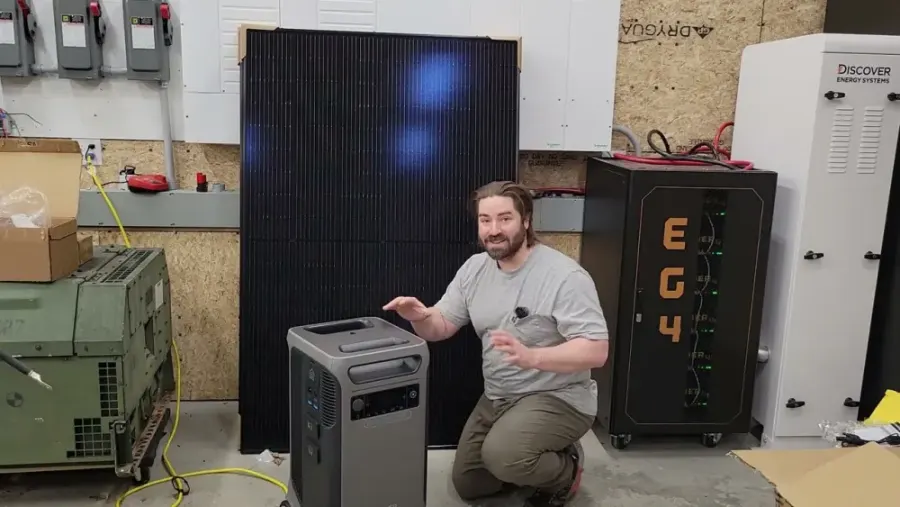




The full story
By the Storedwatts editors · Published Nov 20, 2026
The F3800 Plus is bought for home backup, so the story starts with how long it lasts and what it can run, then how it refills and how it ties into a house. A few terms first: watt-hours (Wh) are how much it stores, watts (W) are how much it can run at once, and surge is the brief start-up kick a fridge or pump needs.
Days of fridge from 3,840Wh, and an idle draw measured both ways6.9/10
A full charge carries a household fridge through a multi-day outage. PCMag ran a refrigerator from full to empty and got "about 63 hours" 1, and The Bug Out Location's estimate for its own fridge lands in the same range. A space heater is a different job: CNET's emptied the battery within a few hours.
Not all of the 3,840Wh reaches the outlet, which is normal for a station this size. Jasonoid's AC test is typical of the measured results: "I measured 3270 W hours of usable capacity and this result is 85.1% of the advertised capacity" 2. HOBOTECH's figure came in a little lower, and The Bug Out Location and Cleanerwatt got slightly more.
The idle draw is where the evidence splits. HOBOTECH recorded "a whopping 112 Watts being consumed as long as the inverter is just turned on" 3, while Shark Numbers and Jasonoid found a much smaller drain. Silver Cymbal saw both on the same unit, before and after an update.
“With one firmware update, this thing went from being the worst idle consumption efficiency rate to now being the best unit I've ever tested.”
The practical advice is the same either way. Update the firmware as soon as it is unboxed, and turn the AC output off when nothing needs it.
6000W of split-phase from one box, with outlets that go dark while charging6.8/10
The inverter is the reason to pick this station. It supplies 6000W at 240 V from one unit, which few portable stations do without a second unit alongside. Silver Cymbal put it plainly: "I'm running this huge heater that runs at 5,500 watts at 240 volts, and it works perfectly." 4
Jasonoid's maximum-load test finished without a shutdown or overheating, and Rocky Broad Solar ran an air conditioner in hot sun and watched the compressor start cleanly. The limits show up with large motors. The Solar Lab notes it is not rated for loads with a very high start-up current, and The Bug Out Location got an overload error when several appliances kicked on at the same moment.
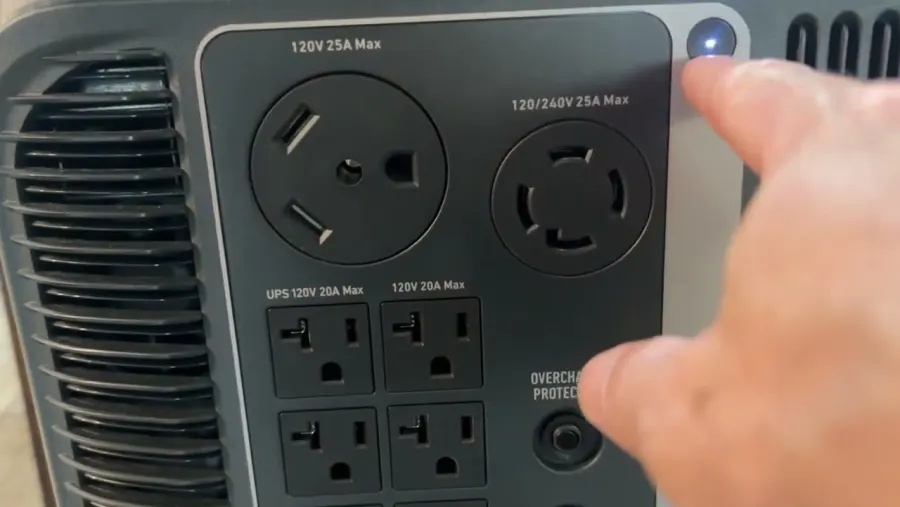
The catch is in the outlets. The full output is only available at the 240 V locking outlet; the household sockets and the RV outlet are capped well below it. Charging also changes what works, and HOBOTECH was blunt about it: "only half of the 120 volt Outlets work when charging at 120 volts why that's just lazy" 5.
Charging from 120 V also switches off the 240 V outlet, and charging from 240 V switches off the household sockets. There is a car socket but no high-amp DC port. Anyone planning to charge and power loads together should map out which outlets stay live first.
3,200W of solar through Anker's own plugs, and a wall rate that depends on extra batteries7.8/10
Solar is the strong side of charging. The 3,200W input is split across two inputs, and the higher voltage ceiling on this model makes it easier to wire panels in series or reuse an existing array 6. DavidPoz watched his panels reach their nameplate rating through it, and HOBOTECH and Android Authority both put a full solar refill at a couple of hours with a maxed-out array.
The complaint is the connector. The solar ports use Anker's own plug, so standard panel leads need the supplied adapter cables, and losing one means waiting for a spare 7.
From the wall, the headline charging speed needs a caveat. HOBOTECH found "they advertise $6,000 watt charging but it only charges at 3,400 Watts unless you add on a bunch of expensive batteries" 8. Signature Solar and Cleanerwatt confirm that the top rate needs at least one expansion battery attached. A generator can refill it through Anker's adapter cable, and the station can keep powering 240 V loads while it does.
Plugs into a transfer switch as it is, and the automatic panel needs an electrician8.3/10
Home integration is consistently praised because the simple route is so simple. The 240 V outlet on the side connects to a manual transfer switch or generator inlet with one cord, and The Bug Out Location called the hookup to its subpanel straightforward. DavidPoz makes the point that matters: one unit is enough for 240 V 9.
That manual setup has a limit Minute Man Solar spells out. If nobody is home to flip the switch, nothing is backed up. Automatic switchover needs Anker's Home Power Panel, and CNET notes that adding a panel and transfer switch can mean permits and an electrician 10.
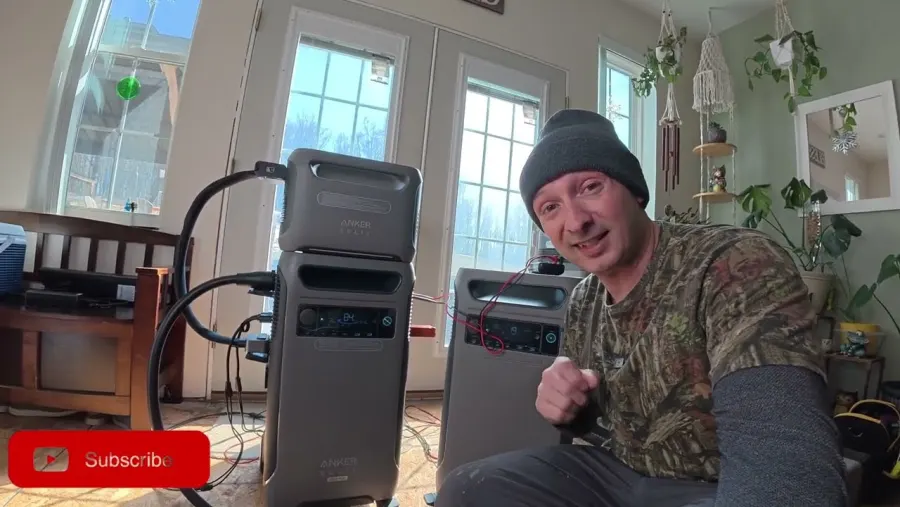
There is room to grow. Expansion batteries stack on top of the unit, a second F3800 Plus doubles the output, and Tommy Callaway found a battery from the original F3800 works with the new model. The Solar Lab's caveat is that this is still a portable station rather than a permanently installed system.
A switchover clocked faster than Anker's claim, and a screen that will not stay on8.9/10
The app and the UPS function are the best-rated parts of the station. The app is simple to navigate, updates firmware with a tap, and lets you watch and switch the outputs remotely over Wi-Fi 11. With the Home Power Panel it can also charge on cheap overnight power and discharge at peak rates.
The grid-to-battery switchover is quick enough for computers. Jasonoid timed it: "that total time is 14. 3 milliseconds versus the advertised 20 milliseconds so it is faster" 12. PCMag's desktop workstation rode through simulated outages without a reboot.
The gripes are small and consistent. Only some of the 120 V outlets are UPS-backed, the screen goes to sleep and cannot be set to stay on, and HOBOTECH found it dim at full brightness. Brison adds that the operating modes are less intuitive than they should be for a machine that may only come out a few times a year.
Solid on its wheels at 136.7 lb, with fans that are quiet until the load climbs7.9/10
The casework is well regarded. PCMag describes thick panels and reinforced corners, the cells are LFP rated by Anker for 3,000+ cycles, and Tommy Callaway had a faulty unit replaced within days. Several early units needed a firmware update before everything behaved, so that is the first job after unboxing.
Fan noise is a matter of load. The Bug Out Location reports "The fan noise, even at 2,000, 3,000 watts, was really low." 13 At the top of the range HOBOTECH heard something else: "yeah 57 58 DB at full blast this thing is pretty darn loud" 14.
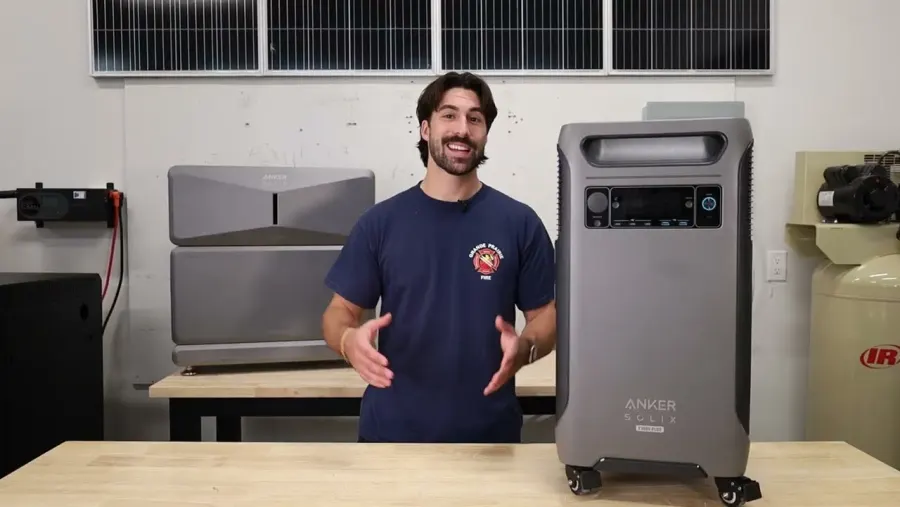
Then there is the 136.7 lb. It has wheels and a handle, but as Android Authority put it, "it ain't exactly like taking a suitcase through the airport" 15. The Solar Lab also points out that it is not outdoor rated, so it needs a dry spot in a garage or utility room.
Seldom bought at list, and the add-on batteries cost more than they look5.8/10
Value divides opinion, and the list price is the main reason. Anker's MSRP is $2,999.99, but PCMag notes it is commonly sold for far less 16, and the praise from HOBOTECH, Cleanerwatt and AppleInsider is all aimed at those sale prices.
The cost of growing the system gets less attention and deserves some. The Solar Lab finds the expansion batteries get more expensive per kilowatt-hour as the system scales 17, and the fastest wall charging depends on owning at least one. CNET's view is that the station can pay for itself under the right electricity tariff, but only after a large outlay up front.
Our verdict
Buy the F3800 Plus if you want one station that feeds a transfer switch, runs 240 V loads and takes a large solar array, and you have a dry place to park 136.7 lb. Look elsewhere if you need to carry it, want all outlets live while charging from a 120 V socket, or expect silence at full output. Before paying, check the current price against $2,999.99 and cost in any expansion battery you will need for fast charging. Once it arrives, update the firmware and learn which outlets work in each charging mode before the first outage.
11 sources quoted in this story (17 notes)
- 1pcmag.com · written review “Starting from a full charge, the system powered the appliance for about 63 hours before the battery was depleted.”
- 2Jasonoid - Solar Power, Batteries, and More! · 12:51 “I measured 3270 W hours of usable capacity and this result is 85.1% of the advertised capacity is definitely a respectable result”
- 3HOBOTECH · 7:26 “that's a whopping 112 Watts being consumed as long as the inverter is just turned on that's a new record for this Channel”
- 4Silver Cymbal · 2:19 “I'm running this huge heater that runs at 5,500 watts at 240 volts, and it works perfectly.”
- 5HOBOTECH · 32:08 “the inverter is awesome it's powerful it's not too loud although I've heard a lot quieter at this size” but “only half of the 120 volt Outlets work when charging at 120 volts why that's just lazy”
- 6Tommy Callaway · 4:02 “each solar panel input you can get a maximum of 1,600 Watts or a total of 3200 Watts”
- 7HOBOTECH · 33:40 “the big let down here is the proprietary connectors for the solar”
- 8HOBOTECH · 3:03 “with maxed out solar you can fully recharge this thing in well under 2 hours from the Sun” but “they advertise $6,000 watt charging but it only charges at 3,400 Watts unless you add on a bunch of expensive batteries”
- 9DavidPoz · 1:05 “So, that's great out of one unit. You don't have to parallel multiple units to get that 240 volts.”
- 10cnet.com · written review “If you want whole-home backup power without a costly install, the Anker Solix F3800 Plus is a great option.” but “if you want to use it for home backup also need to install a smart panel and transfer switch, which can involve permits and an electrician.”
- 11Rocky Broad Solar · 9:50 “once you have this connected to Wi-Fi, you can remotely turn on and off the DC and AC output controllers.”
- 12Jasonoid - Solar Power, Batteries, and More! · 9:56 “that total time is 14. 3 milliseconds versus the advertised 20 milliseconds so it is faster”
- 13The Bug Out Location · 15:09 “The fan noise, even at 2,000, 3,000 watts, was really low.”
- 14HOBOTECH · 13:04 “yeah 57 58 DB at full blast this thing is pretty darn loud”
- 15Android Authority · 8:32 “this is just shy of 140 lb and though it has wheels and a handle it ain't exactly like taking a suitcase through the airport”
- 16pcmag.com · written review “Listed for $4,799 but commonly available for around half that price”
- 17The Solar Lab · 9:42 “Expansion batteries also become more expensive per kilowatt hour as you scale your unit.”