


The full story
By the Storedwatts editors · Published Nov 20, 2026
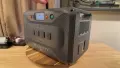
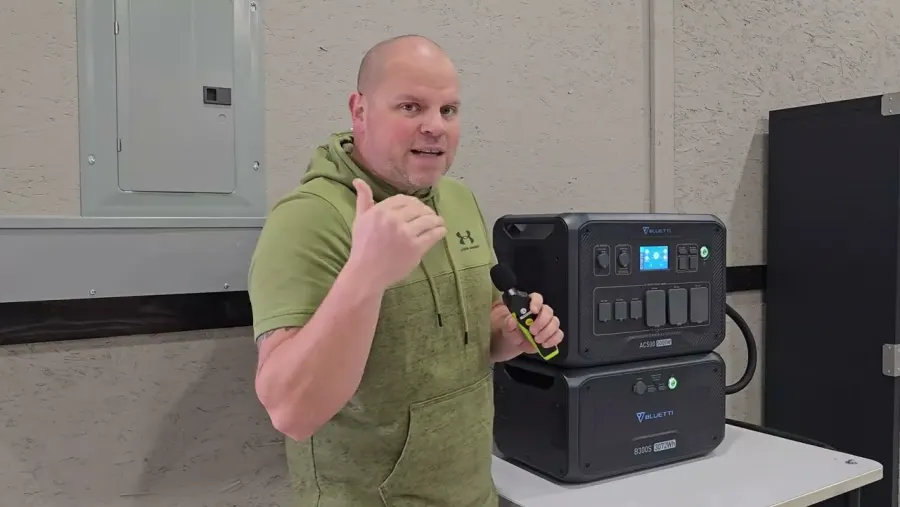
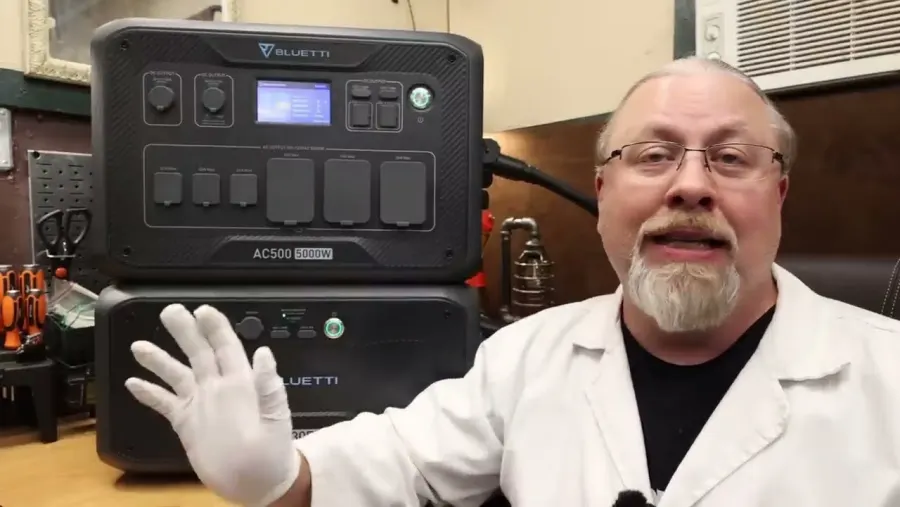
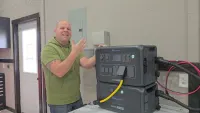
This is a two-box system: an inverter that does nothing alone and a battery that plugs into it. Most of what matters follows from that design, both the output and room to grow it gives and the cables, weight and cost it brings.
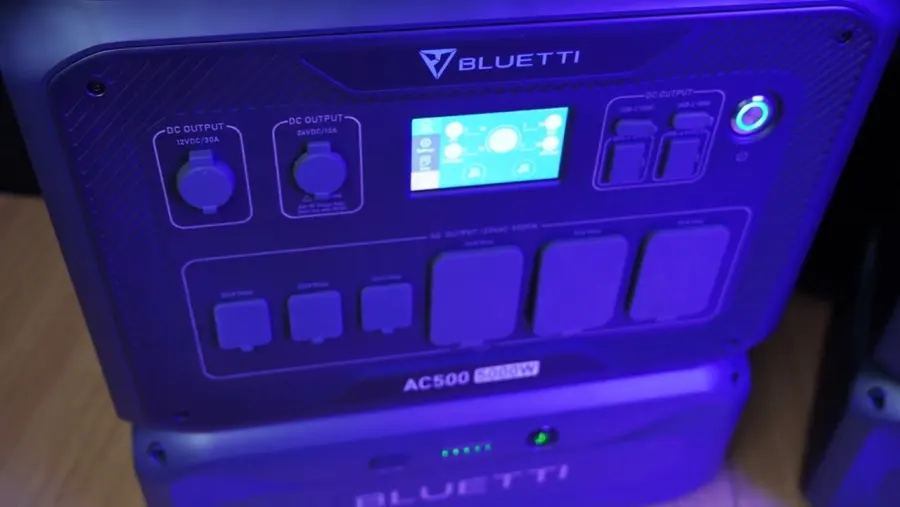
5,000 W through three wall outlets and a 50 amp plug8.4/10
Output is the strongest thing about this system and it is widely liked. Watts are how much a station can run at once, and surge is the brief start-up kick a fridge or pump needs. BLUETTI rates the AC500 at 5,000 W with a 10,000 W surge, and measured tests held the full rating for minutes at a time with no cut-out. In practice that covers microwaves, air conditioners, space heaters and a shop compressor, even with other loads running alongside.
“I've never tested a power station which can supply five kilowatts of power and it's doing it effortlessly no sign of cutting out” but “you can't use the full range of the power when you've only got one battery”
There are two catches. Minute Man Solar found that a single battery holds output a little below the full rating, and the last of it needs a second battery.1 The panel also favors large RV and transfer-switch plugs over household sockets. Will Prowse counted "only three small 120 volt Outlets" and wished for more.2
The DC side meets its ratings, but one of the round sockets is 24V, not 12V. Check the label before plugging in a 12V accessory.
A strong return under heavy AC loads, a weak one at a trickle6.8/10
How much of the 3072Wh comes back out depends on what you plug in, and the measured results divide opinion. Watt-hours are how much a battery stores, and some is always lost in the inverter. Eric Hernandez, running a heavy AC load with two batteries connected, worked out "a usable capacity of 95.7%".3 HOBOTECH's DC test went the other way: "2300 wat hours out of 3072 for 75%".4
Most other AC tests landed between those two, around or a little below the usual figure for a station this size. The pattern is consistent: a big inverter is efficient when it is working hard and wasteful when it is barely loaded. Todd Parker measured a steady standby loss with the AC ports on and nothing connected, so switch the inverter off when it is idle.5
For the outage question, Jasonoid ran a kitchen fridge on one battery until it was nearly empty: "I was able to run the fridge for 27 1/2 hours".6 Other fridge estimates run to several days, so runtime depends heavily on the fridge. One battery will not carry a whole house with ovens and air conditioning for long.
Six batteries on one inverter, and no 240V without a second AC5007.6/10
Expansion is simple and goes a long way. One AC500 accepts up to six B300S batteries, for 18,432Wh, and batteries can be added later.7 Older B300 batteries fit too, though the cables supplied with some newer battery versions do not match the AC500, so confirm the cable before ordering.
The limit is voltage. A single unit is 120V only, and even its 50 amp outlet carries 120V on one leg. Minute Man Solar wired one to an interlock and reported, "I can only run half of my electrical panel and nothing 240 volts".8 Two AC500s linked together give split-phase 240V, which means buying a second inverter and at least one more battery.
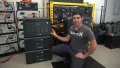
“this inverter circuit is only single phase 120 so it doesn't even produce 240 volts at all”
For selected circuits, the large outlets plug straight into a transfer switch. Wiring the system into a home panel is a different job. Trusted Reviews says it must be designed and installed by a qualified electrician.9
Quick at the wall, with a strict voltage limit on the solar side7.9/10
Charging is fast and widely liked. Trusted Reviews saw "a full charge in under 90 minutes" from mains power, and a 240V source pushes the rate higher still.10 The charge current can be turned down in the settings, which helps on a small generator or a shared circuit. AC and solar can also run together.
BLUETTI rates solar input at 3,000W across two inputs. The complaint is the voltage ceiling on each one, which limits how many panels can be wired in series and leaves no margin. Minute Man Solar tripped an alarm with a slightly oversized array: "even by 1.5 volts we cannot go over".11 Size the array with care, and allow for cold mornings when panel voltage rises.
Computers stay on through an outage, but the screen shows no time remaining7.4/10
The UPS function works well. HOBOTECH called it "one of the fastest switch overing UPS solar generators I've ever seen", and Trusted Reviews ran a computer and a projector through the change without a flicker.12 The UPS modes include scheduled charging for off-peak rates and a solar-first setting.
The touchscreen is responsive and the app is generally liked, though it carries BLUETTI's forum and promotions and can need reconnecting. The repeated gripe is that the display gives charge as a percentage and never as time remaining.13 After the battery runs flat and the inverter shuts down, it has to be switched back on by hand.
Low fan noise, bulky battery cables and two dead units on record7.6/10
Build is widely liked, mostly for how quiet it is. Todd Parker called it the quietest station he has tested, and several others heard little change between light and heavy loads.14 Freshly Charged disagreed and found the fans loud, so expect some variation. The battery can also warm itself to accept a charge in freezing weather.
The thick, stiff cable between battery and inverter draws steady complaints. It sticks out from the side and adds to the footprint. The system is heavy enough that most people will want a cart, and it is not weatherproof.

“uh but we currently have two dead units like at the end of the day I honestly feel bad for this unit”
The Solar Lab had two inverters that would not power on.15 Todd Parker had voltage errors during solar charging until a firmware update cleared them. Warranty length is reported differently from source to source, so confirm the current terms with BLUETTI before buying.
Praised at launch prices, questioned at list6.7/10
Value divides opinion, and most of the split is about when the price was checked. BLUETTI lists the system at $2,799. The warmest verdicts came at pre-sale and crowdfunding prices well below list, and the system is often discounted. At full price The Solar Lab was blunt: "it doesn't make sense to buy".16
The modular design makes the first purchase smaller, since capacity can be added in stages. Each extra battery is expensive, though, and a 240V setup doubles the inverter cost. Add up the system you will end up with, not just the starter pair.
Our verdict
Buy the AC500 + B300S if you want strong 120V output for selected home circuits or an RV, with room to add batteries over the years. Skip it if you need 240V from one unit, or if you need something one person can carry. Before ordering, check the street price against $2,799, confirm which battery cable is in the box, and plan any solar array around the voltage limit.
8 sources quoted in this story (16 notes)
- 1Minute Man Solar · 6:53 “if you have one battery you're limited to 4 500 watts of output and if you want to access the full 5000 watts of output capacity then you need at least two batteries”
- 2DIY Solar Power with Will Prowse · 0:10 “on the new unit it outputs 5000 Watts at the AC outputs on the older one it was only 3 000 Watts” but “only three small 120 volt Outlets I wish there was more because I like how this one has six”
- 3Eric Hernandez · 15:23 “Doing the math, that gives this unit a usable capacity of 95.7%. Most power stations of this size put out about 80 to 85% on average.”
- 4HOBOTECH · 10:42 “the results of the DC battery capacity test it scored 2300 wat hours out of 3072 for 75% now while that is not the best result”
- 5Todd Parker · 1:58 “this lost 1.1 percent per hour with the AC ports on but no loads connected which translates to about 34 watts per hour of standby losses”
- 6Jasonoid - Solar Power, Batteries, and More! · 11:57 “I was able to run the fridge for 27 1/2 hours now at the end of that test this was at 2%”
- 7trustedreviews.com · written review “In total, up to six B300S batteries can be connected together to give a total of 18,432Wh”
- 8Minute Man Solar · 1:39 “I have this connected to my interlock switch which the plug for it so that way if I wanted to I could run my house off of the system” but “I can connect it to my house but in this configuration I can only run half of my electrical panel and nothing 240 volts”
- 9trustedreviews.com · written review “In this case, the system does need to be designed and installed by a qualified electrician.”
- 10trustedreviews.com · written review “On mains power alone, the Bluetti AC500 + B300S Home Battery Backup can deliver a full charge in under 90 minutes.”
- 11Minute Man Solar · 8:45 “oh and now we get an alarm the alarm is over voltage so even by 1.5 volts we cannot go over”
- 12HOBOTECH · 27:06 “this is one of the fastest switch overing UPS solar generators I've ever seen usually you'll get some kind of blink”
- 13Todd Parker · 2:46 “if the grid goes down it will switch to battery power within 20 milliseconds which is fast enough for most desktop computers or internet routers to stay running” but “the touchscreen display is nice but it doesn't show you the time remaining like pretty much every other Power Station”
- 14Todd Parker · 5:26 “this is the quietest Power Station I've ever tested” but “I was plagued with random Hardware voltage errors when charging with solar”
- 15The Solar Lab · 9:33 “uh but we currently have two dead units like at the end of the day I honestly feel bad for this unit”
- 16The Solar Lab · 6:01 “the biggest real issue that we have with this unit specifically it doesn't make sense to buy”