

The full story
By the Storedwatts editors · Published Nov 20, 2026
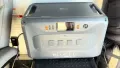
The Apex 300 is easy to misread as a big camping battery. It is closer to a small home backup inverter with a battery attached, and almost every strength and complaint follows from that choice. Here is what the evidence says, starting with the reason to buy it.
Split-phase from a single box, on one cable to a transfer switch9.4/10
The Apex 300 is built to connect to a house panel, and this is the part praised almost without exception. A switch on the front changes the output from 120V to 120/240V, so one unit can feed both legs of a panel and run modest 240V loads such as a well pump. Most rivals need two stations and a pairing box to do that.
“the Apex 300 provides native 120V/240V split-phase output from a single enclosure. That distinction dramatically changes the kinds of appliances it can realistically support.”
HOBOTECH describes the hookup as a single cable to a transfer switch to power a breaker box in an emergency.1 The transfer switch or interlock itself still has to be installed, and sources that cover the job point to an electrician for it. RV owners get a large RV outlet on the side and can plug the rig straight in.
The caveats are small but real. BLUETTI's technical information for a serious home install could be clearer, the battery link cables stick out from the sides, and at least one RV setup needed a separate bonding plug.
Close to nine tenths of the 2,764.8Wh, and a fridge for about two days8.0/10
Usable capacity is consistently praised. Watt-hours (Wh) are how much a station stores, and the useful number is how many come out of the AC outlets. Jasonoid ran it to empty on a resistive load and got "89.7% of the advertised capacity"2, and other measured tests land in the same narrow band just below that.
In outage terms, PCMag reports it kept a full-size kitchen refrigerator going for "nearly 48 hours on a single charge".3 The inverter's idle draw is low for its size, which helps on long, light loads like that.
Two limits apply. The battery is small next to the inverter, so heavy loads such as an RV air conditioner, a stove or a dryer empty a single unit in an hour or two. And at a trickle the efficiency collapses: WaveformScience found that on a tiny load "we're only at 29% efficiency".4 It is poorly suited to powering one small device for days.
A firm 3,840W on AC, and nothing at all on DC5.4/10
Output divides opinion, and the inverter is not the reason. Watts (W) are how much a station can run at once, and the 3,840W continuous rating holds up: PCMag saw it sustain loads at and above that figure for long stretches, then shut down cleanly on larger surges.5 Central air conditioning, a TIG welder and a microwave alongside a kettle all appear in the evidence as jobs it handled.
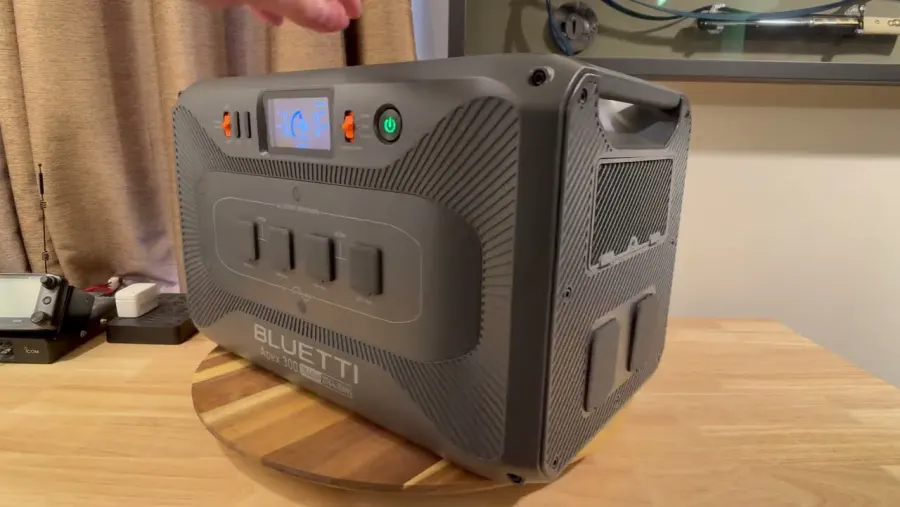
The split comes from what is missing. There are AC outlets and nothing else: HOBOTECH calls it the first station with "absolutely no DC outputs whatsoever".6 Charging a phone or running a car fridge needs BLUETTI's separate DC hub, which makes a bare unit an awkward fit for a camper van.
One more detail matters for big hookups. The large outlet is rated for more current than a single unit can supply, so a rig or panel wired for the full rating will only get part of it until more units are paralleled.7 Whole-home electric heat is beyond one Apex 300.
80% in 45 min by BLUETTI's figure, and a 60V ceiling that clips the 2,400W of solar6.3/10
Charging suits some setups and not others. BLUETTI claims 80% in 45 min in turbo mode, which needs a strong supply. On an ordinary wall circuit it is slower: There's A Trick For That timed a full charge at "2 hours 29 minutes" and suspects a single unit is capped unless an expansion battery is attached.8
The range of sources is the strength. It takes wall power, a generator, an alternator charger and solar, can combine some of them, and keeps supplying 240V while charging from a 120V outlet. It also pauses charging for a moment to help a compressor start, then resumes.
Solar is where the label and the result part ways. The maker rates the two built-in inputs at 2,400W combined, but each stops at 60V, a limit HOBOTECH calls "ridiculously low" for a home backup product.9 Panels have to be wired in parallel, and WaveformScience says of one input, "you can realistically see 790 W".10 BLUETTI's SolarX 4K controller removes the ceiling, at extra cost.
Two outlets that ride through an outage, and batteries that stack underneath8.0/10
The UPS function and the expansion path are widely liked. Two of the AC outlets are meant to switch to battery with no gap, and There's A Trick For That saw exactly that: "Not even a hitch or a flicker or anything."11 Computers and other sensitive gear stayed on in every test in the evidence.
The exact timing is disputed. Jasonoid measured "10 milliseconds on both sides" instead of the advertised zero, which is still quick enough for a desktop PC.12
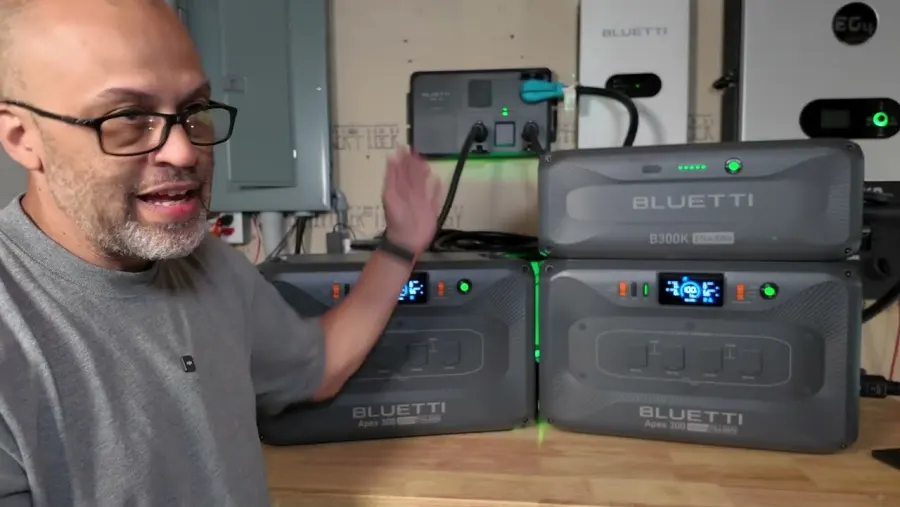
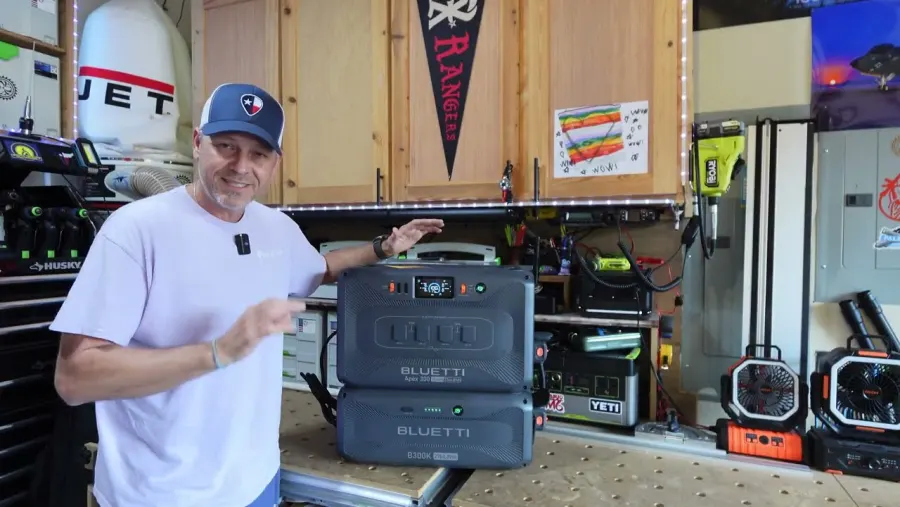
Expansion batteries plug in below the unit and show up in the app as one system, and the station can wake itself and restore its AC outlets after running flat. The app is capable but less polished than the best rivals', the small screen is crowded, and solar through the add-on controller sometimes has to be switched back on by hand after a reset.
Solid at 83.78 lbs / 38 kg, quiet to most ears, with one owner's two dead units8.2/10
Build is consistently praised, with one loud exception. The case is described as rigid and tightly fitted, and the LiFePO₄ cells are rated by the maker for a long cycle life. At 83.78 lbs / 38 kg it is a two-person lift for many, and better parked than carried.
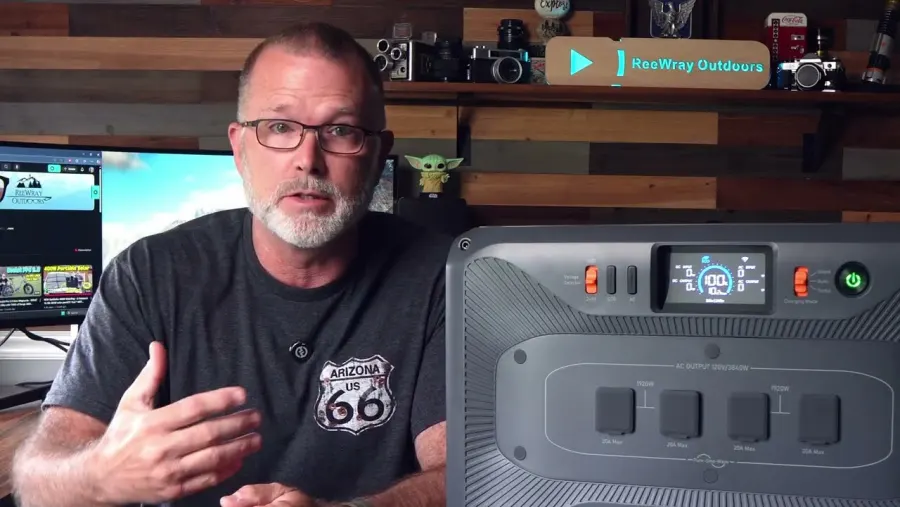
Noise is heard two ways. ReeWray Outdoors calls it "one of the quietest power stations I have tested"13, while Trusted Reviews found it noisier than other BLUETTI units and noted the top getting warm during turbo charging.14 Expect a hush at household loads and an audible fan when it is working hard.
Reliability is the open question. Beer Money Cycle Works received a unit that would not charge, then a replacement with the same fault, and found support hard to reach by phone. Others report months of trouble-free use, but that account is on the record.
“I would not rely on a Bluetti Apex 300 to power your house in an emergency situation.”
Cheap per watt-hour, with the hub, cables and fast charger sold separately7.1/10
Value is widely liked, mostly on price per watt-hour. At $1,699 for the station alone, and often less in bundles with an expansion battery, HOBOTECH compares the pricing to entry-level brands while warning that upgrades mean pricey accessories.15
Those extras are the catch. The DC hub, the solar cables, the high-voltage solar controller and the 240V charging cable are all separate purchases, and Minute Man Solar lists the missing charger among the issues that nearly make it a deal breaker.16 Compared with a cheaper 120V-only station, the premium buys the split-phase output and the expansion path. It is money well spent only if those will be used.
Our verdict
Buy the Apex 300 if the plan is a transfer switch or interlock, a fridge and essentials through an outage, and room to add batteries later. It is also a strong fit for a large RV that plugs straight in. Skip it for camping, van builds without the DC hub, or a solar array designed around high-voltage strings. Before ordering, add the hub, solar cables and any charger you need to the cart and compare that total, not the price of the station alone.
8 sources quoted in this story (16 notes)
- 1HOBOTECH · 1:55 “Most importantly, that means that it's a very easy one cable set to a transfer switch to power your entire circuit breaker box in an emergency.”
- 2Jasonoid - Solar Power, Batteries, and More! · 14:56 “This result is 89.7% of the advertised capacity, which is an impressive result.”
- 3pcmag.com · written review “the Apex 300 powered a full-size kitchen refrigerator for nearly 48 hours on a single charge”
- 4WaveformScience · 54:03 “once you get up to 600 watts or 700 watts, excuse me, you're at 88% efficiency.” but “if we go all the way down to 7.5 watts, we're only at 29% efficiency.”
- 5pcmag.com · written review “the Apex 300 sustained outputs above 3,800W for extended periods without instability while tolerating brief surges exceeding 4,000W before safely shutting down” but “the Apex 300 omits integrated USB ports, 12V automotive outputs, Anderson connectors, and barrel-style DC ports entirely.”
- 6HOBOTECH · 12:12 “48 49 almost 5,000 watts and it shuts down at 5,000 watts. That's pretty darn good.” but “Meet the first portable power station in the world with absolutely no DC outputs whatsoever.”
- 7ReeWray Outdoors · 5:17 “while this outlet is rated for 50 amps, you can only get about 30 maybe 32 amps through it with a single Apex 300”
- 8There's A Trick For That · 7:32 “based on the time lapse, it took 2 hours 29 minutes and 30ish seconds. Charge from 0 to 100%.” but “it may have a limit to only 1400 watts on just the single unit and you need an expansion battery to go faster than that.”
- 9HOBOTECH · 20:13 “You can just change this slider to like whatever you want up to 12 amps cuz anything over 12 amps at 120 volts it just ignores. So, you do have full control over AC grid charging.” but “is the ridiculously low MPPPT voltage of the built-in solar controllers. Only 12 to 60 volts on a product that's supposed to run your entire home during a disaster.”
- 10WaveformScience · 22:32 “And you can realistically see 790 W. That's as much as you're actually going to see from the solar input on the Apex 300”
- 11There's A Trick For That · 20:29 “Not even a hitch or a flicker or anything. So, talk about incredible UPS performance.”
- 12Jasonoid - Solar Power, Batteries, and More! · 13:01 “Now, that's definitely fast enough to keep a computer running if you have a power outage.” but “It's advertised to be a 0 millisecond UPS on this side of the inverter, but as I was testing, I actually got 10 milliseconds on both sides.”
- 13ReeWray Outdoors · 25:49 “this unit is also one of the quietest power stations I have tested and uh it seems to be equally quiet whether you are charging or discharging”
- 14trustedreviews.com · written review “rated to retain at least 80% of their initial capacity after 6,000 full charge/recharge cycles.” but “One thing to note is that this supply is a bit noisier than I’ve come to expect from Bluetti.”
- 15HOBOTECH · 32:34 “starting at 43 cents per watt hour. Now, this is a price point you'd expect from an entry-level fly by nighter” but “no DC outputs of its own, and to upgrade requires adding on some pricey accessories.”
- 16Minute Man Solar · 13:59 “the three big issues that I have that nearly make this a deal breakaker for me is first the 240 volt charger is not included.”