

The full story
By the Storedwatts editors · Published Nov 20, 2026
The DELTA Pro Ultra sits between a portable power station and an installed home battery, and most of what is written about it turns on which of those you expect. As a quiet, plug-in backup for chosen circuits it earns steady praise. As a whole-house system the limits show.
7,200W of split-phase from one inverter, with shut-offs near the top7.5/10
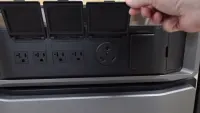
The inverter runs real 240 V house loads, but it does not like living at its limit. EcoFlow rates it at 7,200W continuous, and a single unit supplies both 120 V and 240 V without a second station. The Kelley's Country Life started a deep-well pump on it and ran a central air conditioner and a saw besides.1 Output and ports are widely liked overall.
The trouble starts close to the rating. Jasonoid loaded it to nearly full output and, a few minutes in, "the AC inverter shut down unexpectedly".2 HoboTech saw the same pattern and was blunt: "not being able to sustain over 6,400 Watts for more than a few minutes is a problem".3
Surge, the brief start-up kick a compressor or motor needs, is the other soft spot. Valid Consumer found it inconsistent from one day to the next on a hard-starting load, and several owners with large air conditioners report trips or plan a soft starter.
“The Delta Pro Ultra seems like some days it's really trying, some days it's really not. It's not reliable in testing”
Treat it as a station for one big 240 V appliance at a time, with headroom left over. There is also no 12 V car-style socket on the unit.
Most of the 6,144Wh on AC, and an idle draw worth switching off7.1/10
A high share of the rated capacity reaches the outlets, and a fridge runs well past a day. Jasonoid's AC test returned "91.4% of the advertised capacity", with a lower figure on the DC side.4 HoboTech's AC result was a little lower and he called it about industry average.
In outage terms, Brian's Farming Videos watched the runtime estimate for a refrigerator settle at "1 day and 17 hours pulling 89 watts".5 Heavy loads change the picture fast. At full output a single battery is gone in well under an hour, so a heater or a dryer is a short visit, not a plan.
The catch is what the inverter uses just by being on. HoboTech found that with nothing plugged in, "it would totally kill itself in about 4 and 1/2 days".6 Measured idle figures differ between sources, and round-trip losses through a full solar system are larger still, so turn the AC off when nothing needs it.
A transfer-switch plug on the unit, and an electrician for the smart panel6.3/10
Home integration is easy at the simple end and a contractor job at the automatic end. The inverter has a 240 V outlet that feeds a manual transfer switch directly, with no adapter and no second unit, which is why it is often described as plug and play.7 One forum owner runs most of a house this way full time.
EcoFlow's smart panel adds automatic switchover and per-circuit control. HoboTech notes that it needs a permit and a licensed electrician in most homes, and Atony describes permits turning a quick install into a long wait.8 The unit is also for indoor use only, a point Will Prowse wishes were otherwise.
Whole-house ambitions run into the single inverter. Backyard Warrior, who powers a home from a large stack, found one inverter overloads on 240 V circuits and ended up with a second.9 Opinion on this aspect splits along exactly that line: critical circuits are straightforward, everything-at-once is not.
5.6kW of solar across two inputs, and AC outlets that go dark on a 240 V charge7.8/10
Charging is the strongest part of the hardware, and solar most of all. EcoFlow rates solar input at 5.6kW, split between a low-voltage and a high-voltage port that work at the same time. Will Prowse kept a ground-mount array on the high-voltage side for a month and came away impressed.10 A forum owner with a full battery stack sees input close to that ceiling in full sun.
From the wall it charges slowly on a standard household outlet and much faster on 240 V, including from a generator or an EV charger. The charge rate is adjustable in the app, which helps when a small generator is doing the work.
The fast route has a cost. As HoboTech puts it, "you lose output to all the AC Outlets when you're charging this from 240 volts".11 The Solar Lab adds that once the battery stack grows, the solar ceiling starts to feel small for the storage behind it.
A well-liked app, a switchover timed in milliseconds, and EcoFlow-only batteries8.3/10
The app and the UPS behavior are the most consistently praised part of the package. Jasonoid timed both the online and backup UPS modes and judged them quick enough for sensitive electronics.12 Setup takes moments, and the app handles charge rates, schedules and which circuits run from the battery.
Expansion is generous: more batteries stack on one inverter, and inverters can be linked. The Solar Lab points out the limit, which is that this station works only with its own expansion batteries.
The complaints are about monitoring. One Home Depot buyer wanted a way to watch the system locally and found none, and Backyard Warrior describes checking battery levels each morning and managing loads by hand.13 HVACR Survival also saw a few seconds of delay on some switchovers.
Nearly silent and heavy to move, with support that splits owners6.4/10
It is unusually quiet and solidly made, and the worries are weight and what happens after a fault. The Kelley's Country Life ran it at a heavy load and reported, "I didn't hear a peep out of those fans".14 Jasonoid and HoboTech say much the same.
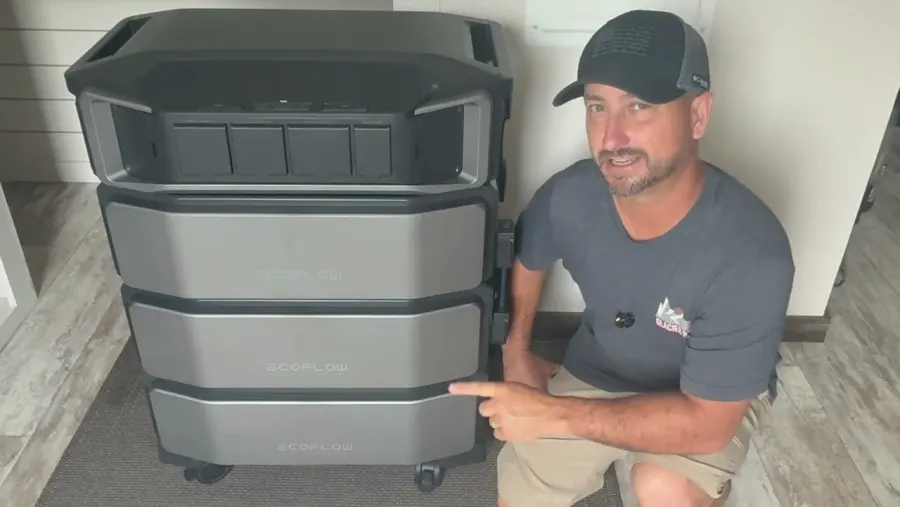
Moving it is another matter. The inverter and battery separate, which helps, but each battery alone is a two-person lift. Will Prowse faults the plastic casters under a tall stack: "they need to have a heavier Duty Caster wheel".15 He also wants the batteries to lock together.
Reliability reports go both ways. Several units have run for months without trouble, while others arrived faulty or lost an inverter later. Service after that divides opinion: one forum owner rates EcoFlow's support highly after two quick fixes, and a Home Depot buyer tells the opposite story.
“I’ve had to have my stuff replaced two times and is my system has been down for months each time waiting on them to ship out a replacement part”
A premium over build-it-yourself systems, easier to justify as the stack grows6.7/10
Whether $2,349 is fair depends on what you compare it with. Against a do-it-yourself inverter and rack batteries it costs more, and Will Prowse says so plainly: "it is pretty dang expensive".16 He adds that a large stack of these batteries works out cheaper in the end, and that repairs and batteries tie you to EcoFlow.
Against installed home batteries and standby generators the sums look better, since it needs little or no professional work in its simplest form. Valid Consumer sees more value here than in EcoFlow's newer version, while The Solar Lab notes that cheaper rivals undercut it heavily. Prices quoted across sources vary with the bundle and the date, so check what is in the box.
Our verdict
Buy the DELTA Pro Ultra if you want a quiet indoor backup that feeds a transfer switch with 120 V and 240 V power, refills from a sizeable solar array, and can grow with extra batteries. Skip it if your biggest load is a large air conditioner with a hard start, or if you expect to run several 240 V appliances at once from one inverter. Before ordering, add up your loads and leave headroom below 7,200W, decide between a manual transfer switch and the electrician-installed smart panel, and confirm which bundle the price covers.
7 sources quoted in this story (16 notes)
- 1The Kelley's Country Life · 4:26 “I'm about to kick on a 24 vol 1 and 1/2 horsepower well pump there it is 3700 WT it spiked up to”
- 2Jasonoid - Solar Power, Batteries, and More! · 6:35 “when I started the max load I was pulling slightly over 7100 Watts which is a crazy amount of power” but “now unfortunately after the test had been going for about 4 minutes the AC inverter shut down unexpectedly”
- 3HOBOTECH · 33:45 “240 volt split phase operation works like a charm and it is seamless with standard 120 volt service” but “not being able to sustain over 6,400 Watts for more than a few minutes is a problem”
- 4Jasonoid - Solar Power, Batteries, and More! · 10:11 “I was able to pull 5620 WS of usable capacity this result of 5620 W hours is 91.4% of the advertised capacity” but “it only got docked on one thing did not meet 85% of the DC capacity”
- 5Brian's Farming Videos · 5:47 “So it would appear that can run this refrigerator for 1 day and 17 hours pulling 89 watts.”
- 6HOBOTECH · 11:52 “it scored 5390 wat hours out of 6144 for it improved roed 88% now these numbers are about industry average” but “so if you left the inverter on with nothing plugged in at all it would totally kill itself in about 4 and 1/2 days”
- 7homedepot.com · written review “already has the 14-30 outlet to deliver 7200 w to your transfer switch. This is a plug and play unit.”
- 8HOBOTECH · 1:48 “with the right Hardware you can chain three of those together to power your entire house with a 21,600 watt Inver inverter” but “the home panel 2 does require a permit and a licensed electrician to install in most residences”
- 9Backyard Warrior · 0:38 “So, if you're going to have a 220, you definitely need two inverters.”
- 10DIY Solar Power with Will Prowse · 2:53 “charging with solar I've actually had a ground Mount connected to this for the last month the high voltage solar input is fantastic” but “now we have power and it's not charging this is one of the downsides of the ultra”
- 11HOBOTECH · 7:19 “yes you can use both the low voltage and high voltage sides simultaneously for a combined total of 5 600 WT of solar” but “the only catch is that you lose output to all the AC Outlets when you're charging this from 240 volts”
- 12Jasonoid - Solar Power, Batteries, and More! · 9:56 “so the online UPS mode is definitely fast fast enough for sensitive Electronics”
- 13homedepot.com · written review “The app is set up well and easy to set parameters.” but “Terrible monitoring. The device has both bluetooth and wifi, but the monitoring sucks and there's no local monitoring capability.”
- 14The Kelley's Country Life · 9:25 “by far the most silent unit I have ever tested even when we had 5700 watts of output on it I didn't hear a peep out of those fans”
- 15DIY Solar Power with Will Prowse · 8:35 “a big complaint I've had with Eco flows in the past is the software and so far with this one it actually worked really well” but “these caster wheels are made out of plastic they need to have a heavier Duty Caster wheel”
- 16DIY Solar Power with Will Prowse · 6:36 “if you need a large system and you really want to Stack up these batteries these will be cheaper in the end” but “it is pretty dang expensive most people nowadays can easily connect the server rack battery to an all-in-one unit with two cables and save a ton of money over this unit”