
The full story
By the Storedwatts editors · Published Nov 20, 2026
Three terms cover most of this page. Watt-hours (Wh) are how much the station stores, watts (W) are how much it can run at once, and surge is the brief start-up kick a fridge or saw needs. The E1000LFP is strong on the first, adequate on the second and weak on the third.
Few stations this size cost less10.0/10
Price is the reason to buy the E1000LFP, and it is praised almost without exception. At $399 for the station alone, it undercuts most rivals with the same storage. Mike Builds summed it up: "And this thing coming in at under $400 really is impressive, especially because it also has a lithium iron phosphate battery."1
The money buys more than storage. Battery heaters, a UPS mode and an expansion port are all included, and those are often missing on budget stations.
The caveat is that the low price comes with a shorter warranty than PECRON's newer models, extendable by registering the unit. The Solar Lab also notes that the official list price is far higher and the station seems to be on permanent sale, so check the price on the day.
A fridge overnight, if the inverter is not left idling7.1/10
Most of the 1024 Wh PECRON rates it at reaches the outlet. Mike Builds ran it to empty and reported "929 out of 1,000 is pretty dang good".2 Several other measured tests land in the same region, a little above or below, and usable capacity is widely liked.
For an outage, that means a full-size fridge through the night and into the next day. Mike Builds ran his fridge for "a little over 12 hours"3, and Jasonoid's test went longer: "a little more than 16 and 1/2 hours".4 The result depends on the fridge. A space heater or kettle at full draw empties it in well under an hour.
The catch is the inverter's own appetite. With the AC output on and nothing plugged in, The Solar Pit found "it lost 40% of the battery over 24 hours".5 The Solar Lab and Jasonoid saw the same kind of drain. Turn the AC output off between uses, or a small load will cost far more battery than it should.
About an hour from the wall, with heaters for cold mornings8.8/10
Charging is the E1000LFP's best-rated trait. PECRON rates a full wall charge at 1.3 hours, and the charge rate can be turned down in the app or on the unit for a weak circuit. The Solar Lab's result was quicker than the maker's figure: "It actually charged in 1 hour, which is better than advertised, which we love seeing."6
The maker rates solar input at 600 W, and tests that pushed it to that limit had no trouble. AskIve Solar's objection is the low voltage ceiling on the solar input, which limits how many panels can be wired in series.7 Charging from a car socket works but is slow.
The battery heaters are the unusual feature. They warm the cells so the station can take a charge below freezing, and Jasonoid calls it one of the first smaller stations to have them.8 The Solar Lab found a limit: the heaters depend on a wall connection, so they are little help at a campsite or in an outage.9
A steady 1800 W, and seconds of surge beyond it6.8/10
The inverter does what the label says for continuous loads and little more. PECRON rates it at 1800 W with a 3000 W surge. On the continuous figure, Mike Builds loaded it right to the limit and reported: "The unit never shut down, never overheated, never did anything weird at full load."10 Space heaters, coffee makers and hair dryers ran in other tests.
The surge figure is where opinion turns. Jasonoid measured a surge barely above the continuous rating, and Gavin Stone found the unit shuts down within seconds of crossing it. His circular saw test ended plainly: "So, it just can't start the saw all the way."11
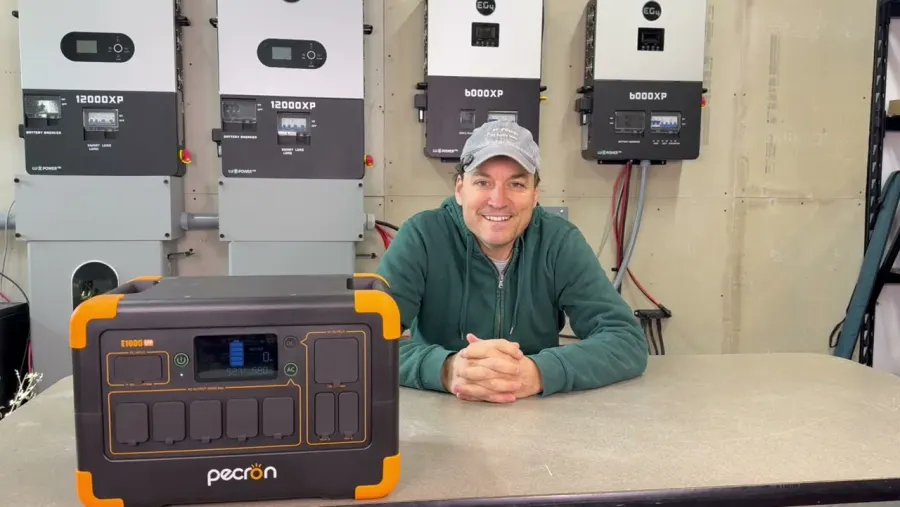
Sustained heavy use is the other question. The Solar Pit wrote that "Continuous discharge loads made the unit shut down prematurely in multiple tests."12 No one else reported that, so treat it as a risk on record, not a certainty. The port selection is generous: a full row of AC outlets, two high-power USB-C ports, a car socket and a high-current DC output that Jasonoid rates as the station's strongest feature.
Quiet for some, hot and loud for one tester5.8/10
Build and noise divide opinion more than anything else here. Several units ran close to silent. Our Black Cat Cottage, charging hard from the wall, heard nothing: "there is no fan noise at all. Zero."13 Mike Builds and AskIve Solar describe much the same.
The Solar Pit's unit behaved differently. Its fans measured "noticeably louder than many competitors in the same class"14, it built up heat during fast charging, and it overheated before finishing a full discharge. Soldier Knows Best also found it louder than slightly pricier rivals.
“Based on my testing results, I could not recommend this system with any confidence. The overheating issue is a definite deal breaker for me.”
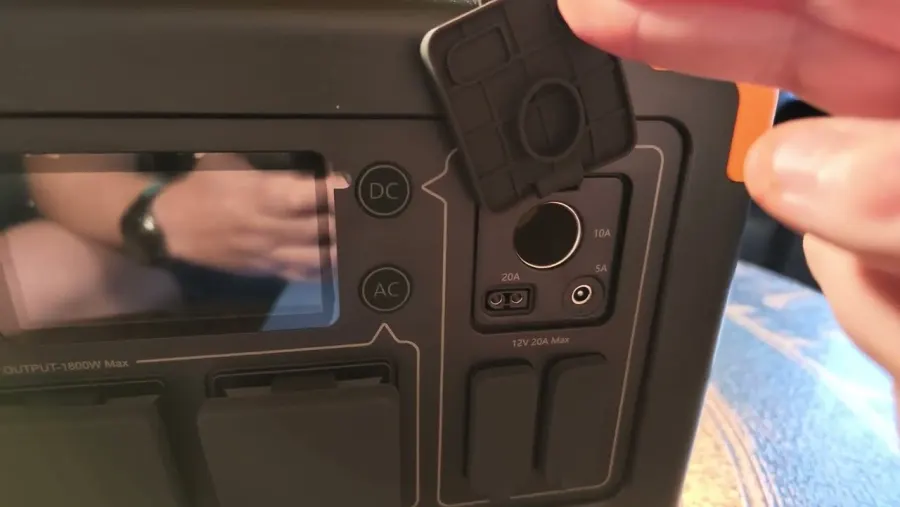
The casework is called rugged, with rubber corner bumpers, though the rubber port covers are widely disliked as flimsy and fiddly. PECRON's customer support has drawn complaints in the past. The Solar Lab and Gavin Stone both reached a person by phone.
A quick UPS, expansion, and an app that frustrates6.3/10
The feature list is long for the money, and the software is the weak part. The UPS mode switches over fast enough to keep a desktop computer running in Jasonoid's test, and Ramblin' Bob rates its switching above a newer PECRON model. Expansion batteries plug into a port on the back, a clear draw if the station might grow into a bigger home backup later.
The app suits some and not others. The Solar Lab likes it, and AskIve Solar values the stable Wi-Fi link. Our Black Cat Cottage found setup frustrating, with unclear instructions and a Bluetooth connection that never worked, before deciding the app itself was solid.15 Ramblin' Bob dislikes it outright and could not get it to load on his phone.
Smaller gripes add up. There is no built-in light and no wireless charging pad. The screen is large and easy to read but dims quickly, and Adventure Gear TV found the battery percentage unreliable during a cold-weather charge. The Solar Pit's unit would not hold a full charge while plugged into the wall.
29 lbs on two comfortable handles8.1/10
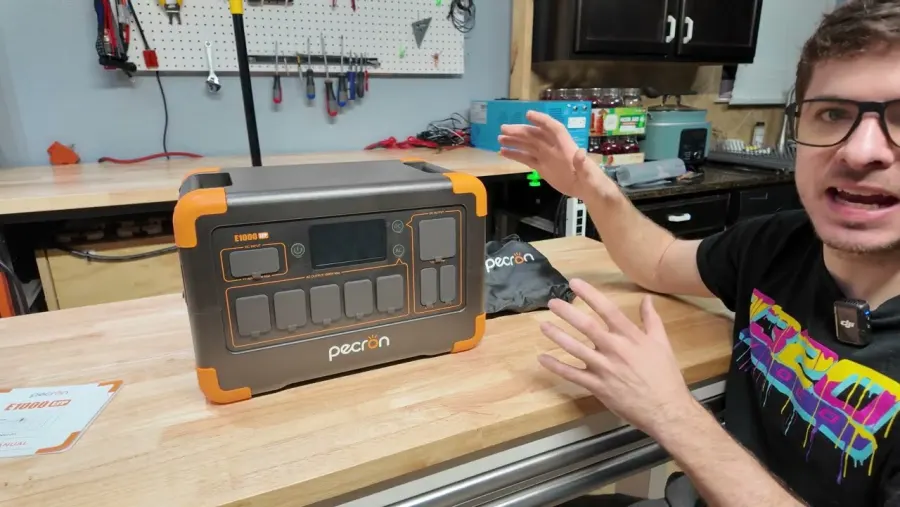
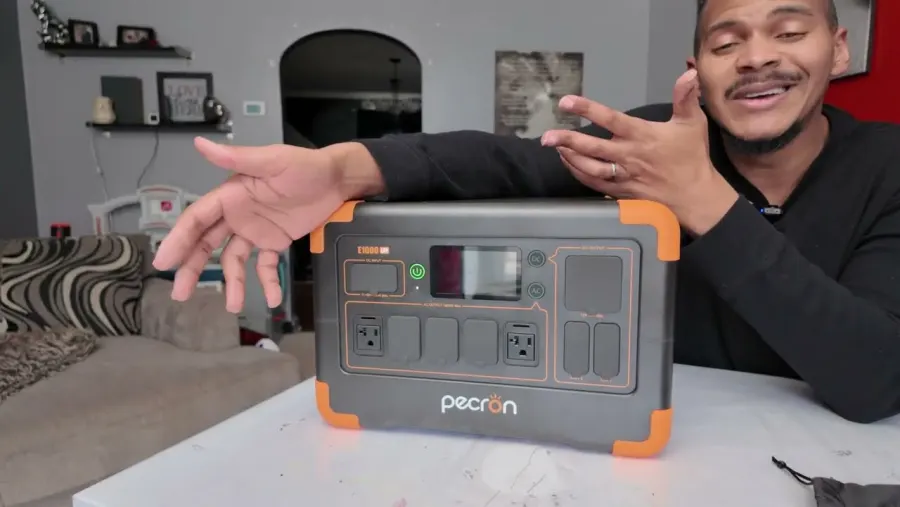
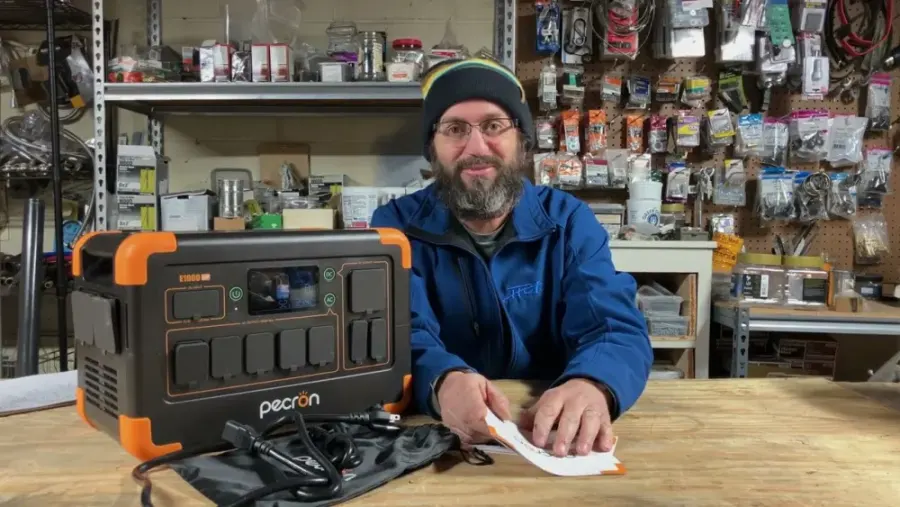
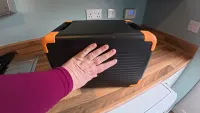
Portability is widely liked. The station weighs 29 lbs by the maker's figure, and the two handles get specific praise: AskIve Solar says moving it has never felt like a chore.16 Ryan Adapts fits it in the floorboard of a vehicle, and it suits a truck bed or a campervan.
It is not the lightest in its class. Ramblin' Bob and FamilyGeekery both mark it down against lighter rivals with similar storage, and Destination Fulltime found it a little heavy to carry. Fine for a car trunk, less so for a long walk to a campsite.
Our verdict
Buy the E1000LFP if the job is a fridge overnight, a weekend at a campsite or a UPS for a computer, and the budget is tight. Skip it for power tools and for long runs near full output, where the short surge and one overheating test unit count against it. When it arrives, run it at a heavy load for a full discharge while the return window is open, and listen to the fans. In daily use, keep the AC output switched off when nothing is plugged in.
7 sources quoted in this story (16 notes)
- 1Mike Builds · 17:57 “And this thing coming in at under $400 really is impressive, especially because it also has a lithium iron phosphate battery.”
- 2Mike Builds · 8:07 “We got a total of 929 watt hours. So, 929 out of 1,000 is pretty dang good.”
- 3Mike Builds · 10:54 “So, we were able to run the fridge for a little over 12 hours, which isn't bad. Actually, about closer to 13.”
- 4Jasonoid - Solar Power, Batteries, and More! · 9:02 “the E1000 lfp ended up running my fridge for a little more than 16 and 1/2 hours”
- 5The Solar Pit · 4:51 “In my usable capacity test, I got 95 watt hours out of the rated 1,024 watt hours of capacity, which translate to around 88% efficiency” but “it lost 40% of the battery over 24 hours. That's very inefficient compared to its competitors.”
- 6The Solar Lab · 8:34 “It actually charged in 1 hour, which is better than advertised, which we love seeing.”
- 7AskIve Solar · 9:41 “You can also charge from the wall at about 1,100 W. It does prioritize solar when it's charging.” but “When you charge this, it has a 60-V input limit on the solar. I'm I'm not into it.”
- 8Jasonoid - Solar Power, Batteries, and More! · 0:15 “this is one of the first smaller power stations to have built-in heaters so you can actually charge this below freezing”
- 9The Solar Lab · 6:20 “If there's a power outage and you don't have access to that wall plug or you're camping or anything like that and you can't plug this into the wall, the intelligent battery heaters don't really work.”
- 10Mike Builds · 13:14 “The unit never shut down, never overheated, never did anything weird at full load. Had no issues.”
- 11Gavin Stone DIY Homestead · 7:56 “So, it just can't start the saw all the way.”
- 12The Solar Pit · 2:22 “It has a pure sine wave inverter, which I did verify produce clean waveforms rated at 1,800 W continuous output.” but “Continuous discharge loads made the unit shut down prematurely in multiple tests.”
- 13Our Black Cat Cottage · 2:34 “Even when you have a thousand or 1,200 watts of input coming into the unit, there is no fan noise at all. Zero.”
- 14The Solar Pit · 7:04 “The noise during charging and load testing measured in at 47.3 dB, which is noticeably louder than many competitors in the same class.”
- 15Our Black Cat Cottage · 3:26 “So it is an excellent excellent app. You do have to sign up and it potentially could be clunky to install it, but the end result is a solid solid app.” but “it was a really annoying process to install. It was very frustrating. The instructions in the manual are not that clear. I never was able to connect through Bluetooth.”
- 16AskIve Solar · 7:45 “The handles are really cool, really comfortable. I've never felt myself grabbing this and feeling like uh this is a pain to move.”