EcoFlow DELTA 3 Classic vs Goal Zero Yeti 1500
Too close to call. The Goal Zero Yeti 1500 scores 77 overall to the EcoFlow DELTA 3 Classic's 76, so the right pick depends on what you value. They differ most on portability and value.
vs
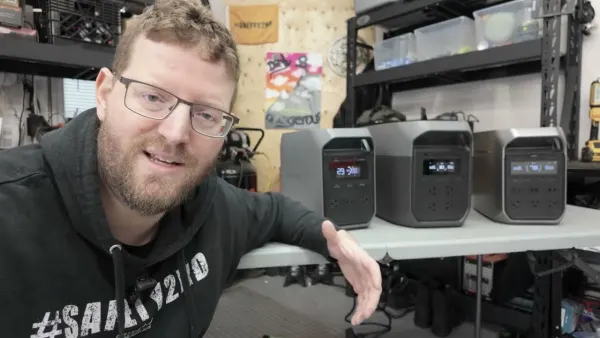
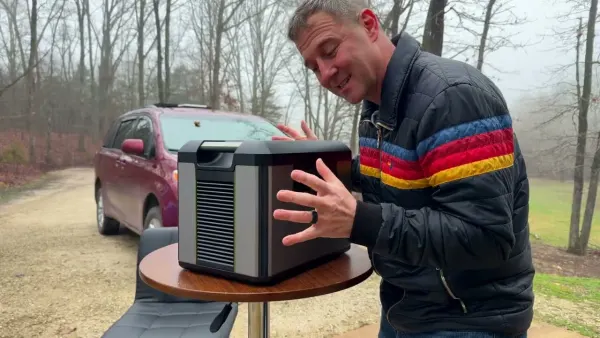
Which should you buy?
Pick the EcoFlow DELTA 3 Classic if
you want a fridge, a router and a few chargers covered through a short outage, charge mostly from a wall outlet, and never plan to add a second battery.
Pick the Goal Zero Yeti 1500 if
you want a station for a truck bed, a base camp or the garage that runs a fridge and a few kitchen appliances and can take rain and knocks.
Aspect by aspect
| 7.5 | Usable capacity | 9.4 | ||
|---|---|---|---|---|
| 6.8 | Charging and solar input | 7.8 | ||
| 6.6 | Output and ports | 8.9 | ||
| 8.7 | Build and reliability | 8.6 | ||
| 8.8 | Value | 5.0 | ||
| 8.3 | Portability | 3.1 | ||
| 6.9 | App and UPS | 9.0 |
Scores out of 10. Bold marks a lead of a point or more.
Where they differ most
- Portability: the EcoFlow DELTA 3 Classic scores 8.3 to the Goal Zero Yeti 1500's 3.1.
- Value: the EcoFlow DELTA 3 Classic scores 8.8 to the Goal Zero Yeti 1500's 5.0.
- Output and ports: the Goal Zero Yeti 1500 scores 8.9 to the EcoFlow DELTA 3 Classic's 6.6.
The details
| EcoFlow DELTA 3 Classic | Goal Zero Yeti 1500 | |
|---|---|---|
| EcoFlow | Manufacturer | Goal Zero |
| 1024 Wh | Capacity (maker) | 1505 Wh |
| Lfp | Battery chemistry | LiFePO4 |
| 1800 W continuous / 3600 W surge | AC output (continuous / surge) | 2,000W continuous |
| 0-100% in 60 min | AC charge time (maker) | Approximately 1.1 hours |
| 500 W max | Max solar input | 900W |
| 12.1 kg ±0.3 kg | Weight | 52.8 lbs |
| No | Expandable | — |